Sketching in 3 Dimensions: Making Space with Fiber
Much of architectural design happens through digital tools. Plans, sections, renderings, diagrams, and digital models allow us to quickly develop and communicate ideas about space. These tools are valuable, but they are not the only ways of thinking through a design.
I have become increasingly interested in making as an alternative form of sketching. Working with physical materials creates opportunities to explore form, texture, structure, and spatial relationships through a process that is slower and more tactile than working digitally. In particular, I have been interested in how fiber arts can be used to think about space in three dimensions.
My project Tactile Hero’s Journey began with this idea. The project explored how a narrative could be translated into a tactile spatial experience through hand embroidery. Rather than illustrating the story through a traditional drawing or digital visualization, I used thread, fabric, and stitch to explore the movement and atmosphere of the narrative.
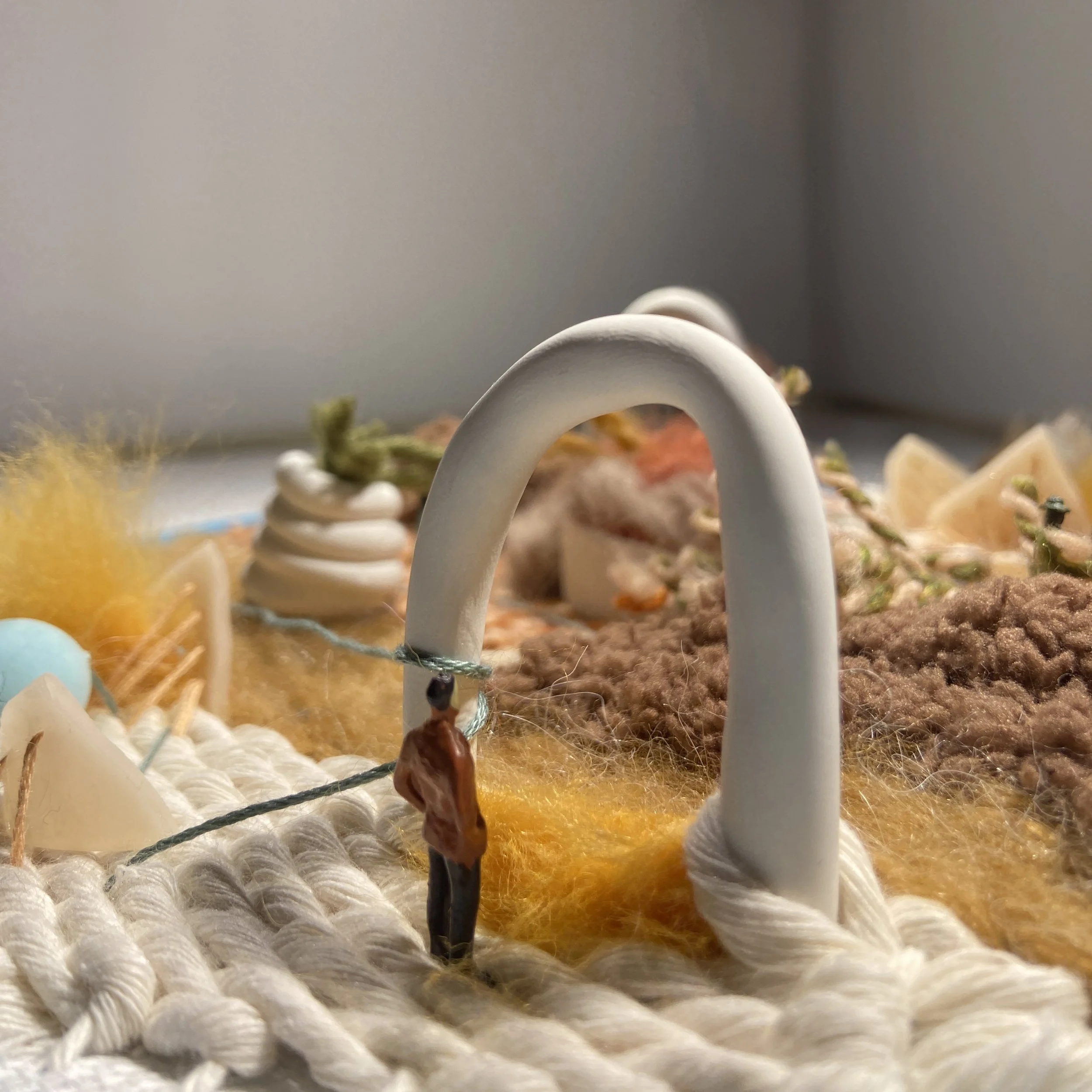
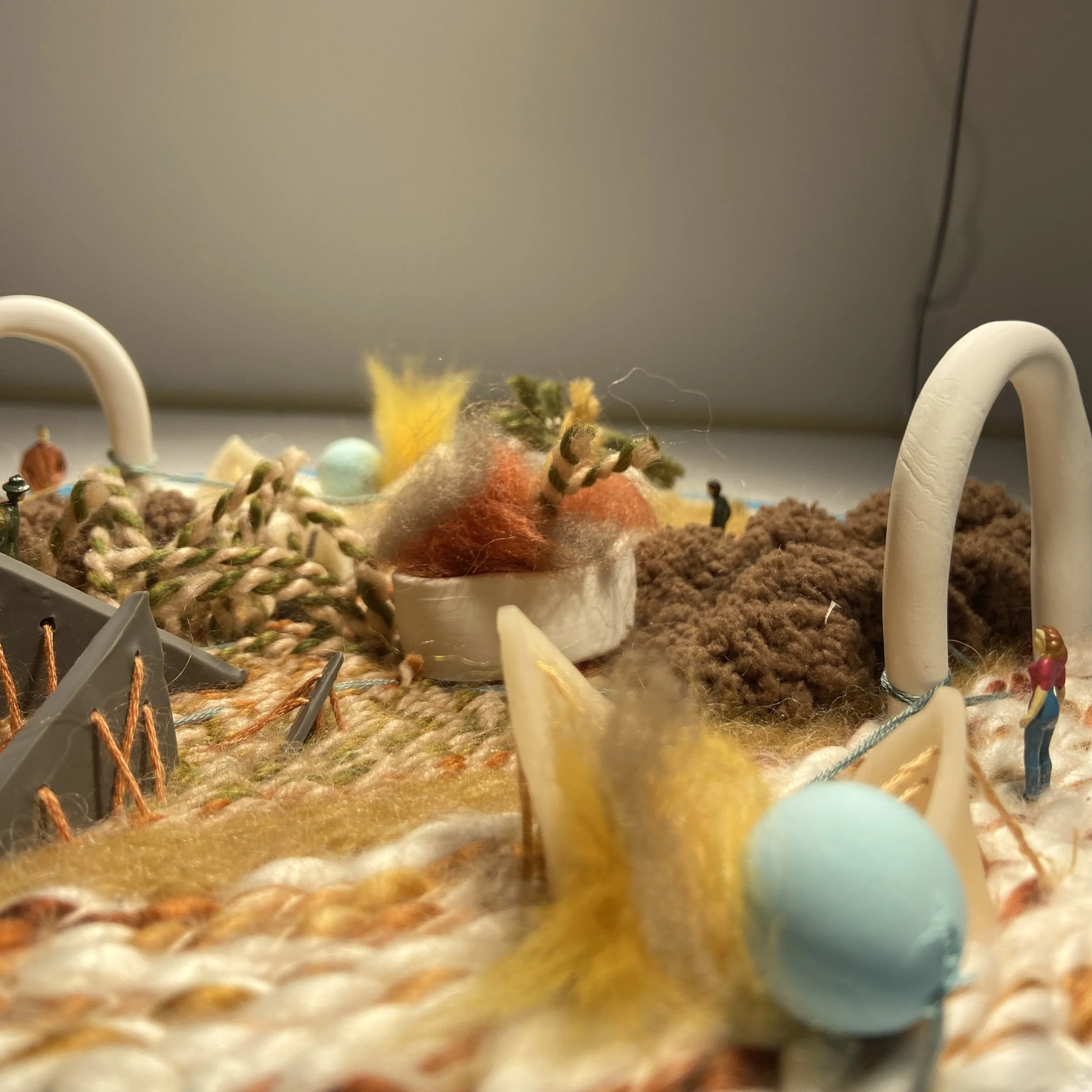
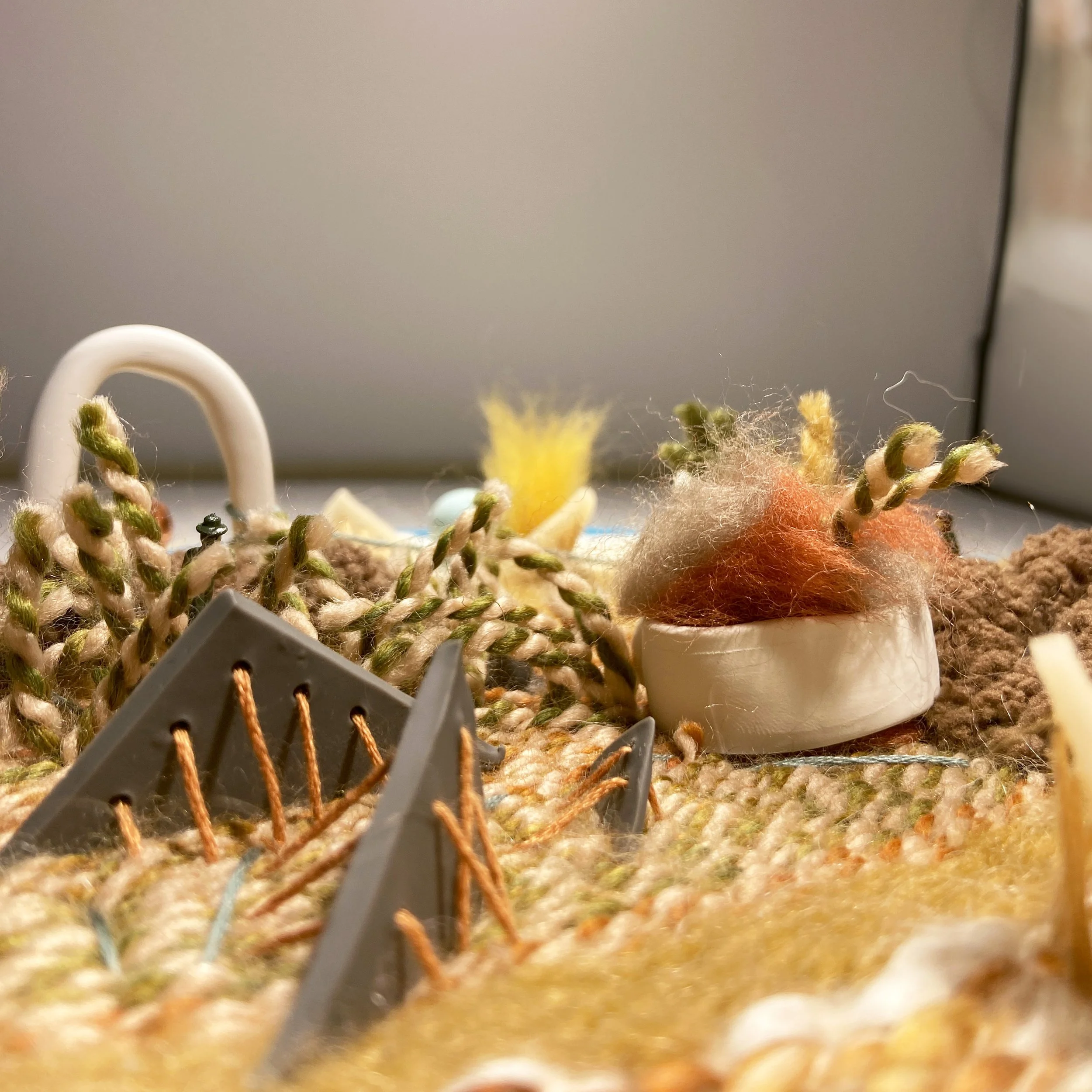
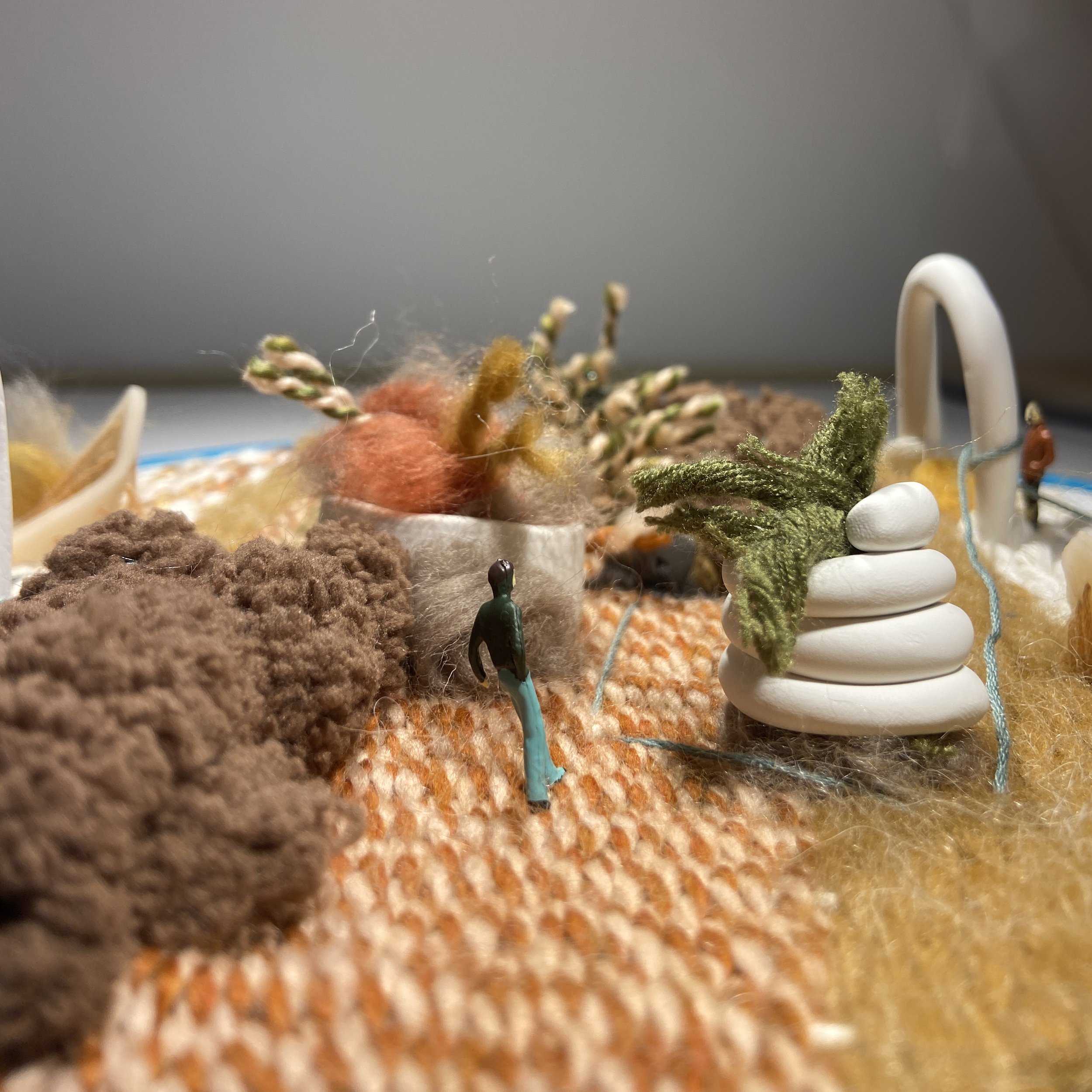
The process changed the way I thought about representation. A line made with thread has a physical quality that a digital line does not. The direction of the stitch, the density of the thread, the texture of the fabric, and the accumulation of individual marks all contribute to the final piece. Decisions that might normally be made through composition or graphic hierarchy were instead made through material and process.
The act of making also introduced a different pace. Working by hand requires attention to small decisions and allows imperfections to remain visible. Rather than working toward a perfectly resolved image, I could respond to the material as the project developed. The process became part of how I explored the idea.
I encountered a similar question while taking a course in digital knitting. One of my experiments was an attempt to translate a floor plan into a knitted representation. I was interested in what would happen if a conventional architectural drawing became a physical object.
A floor plan typically communicates space through lines, symbols, dimensions, and established conventions. A knitted floor plan introduces texture, thickness, flexibility, and scale. A wall is no longer simply a line. A boundary can have a physical presence. A path can be represented through the movement of a continuous strand.
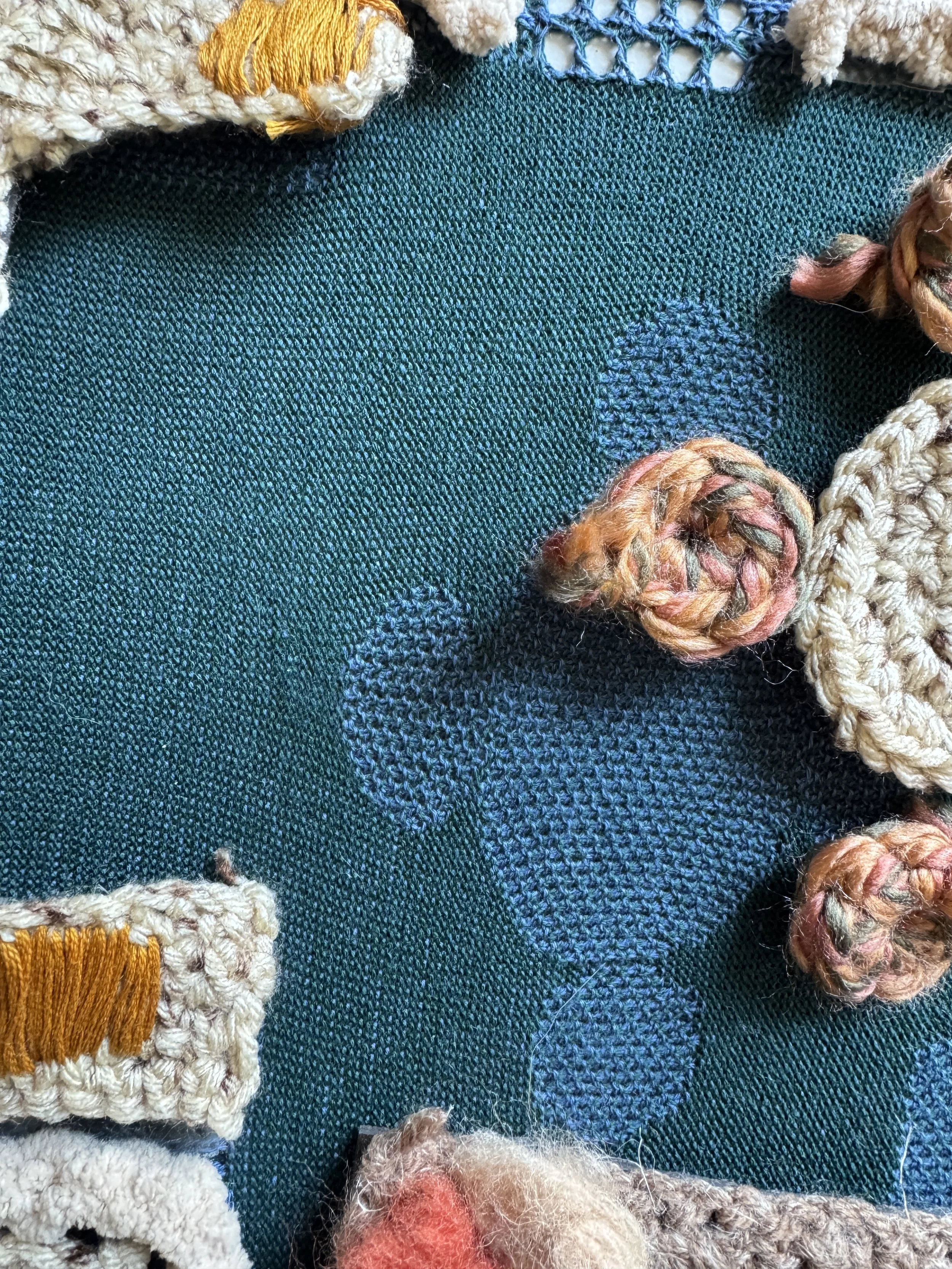
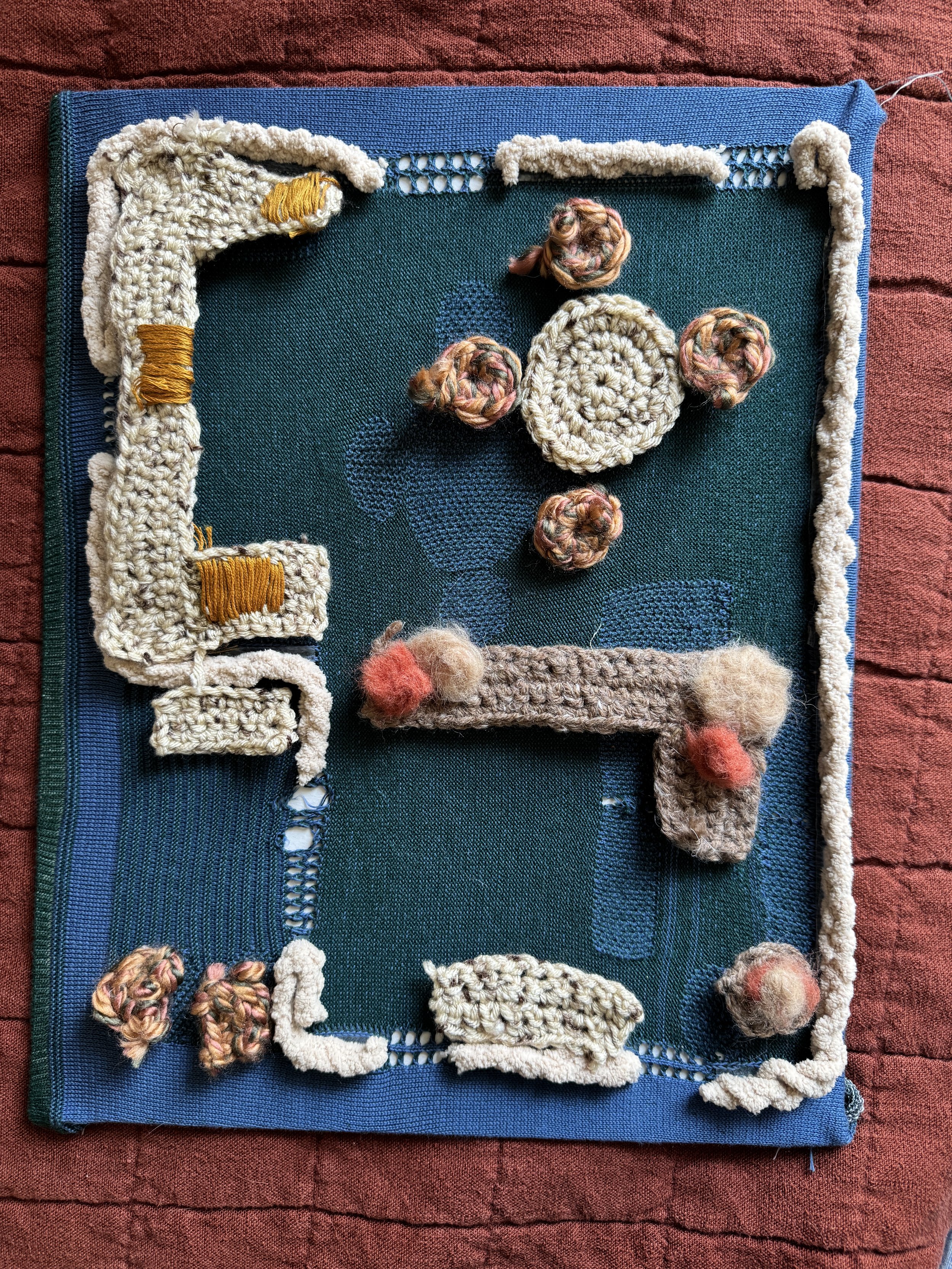
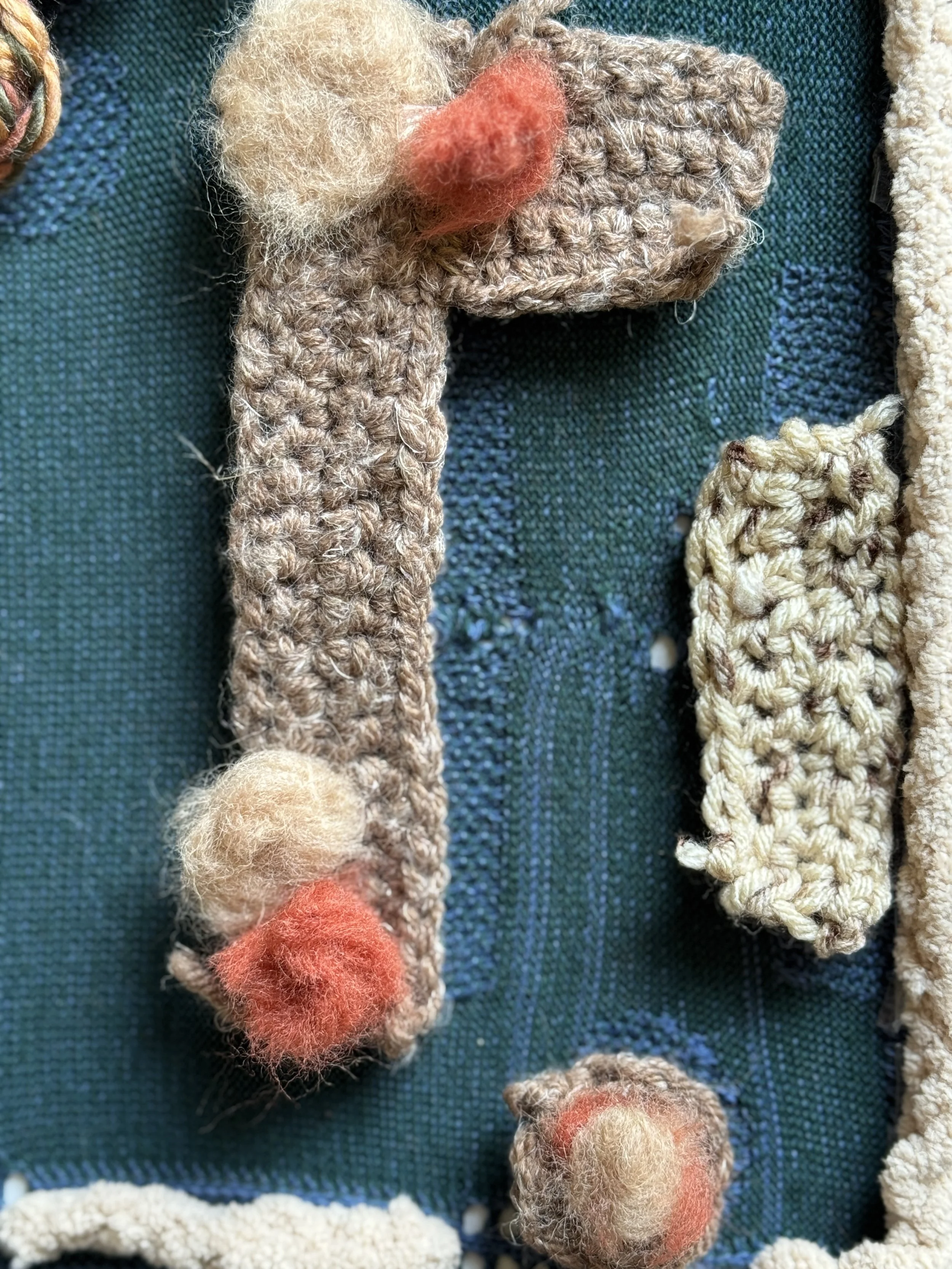
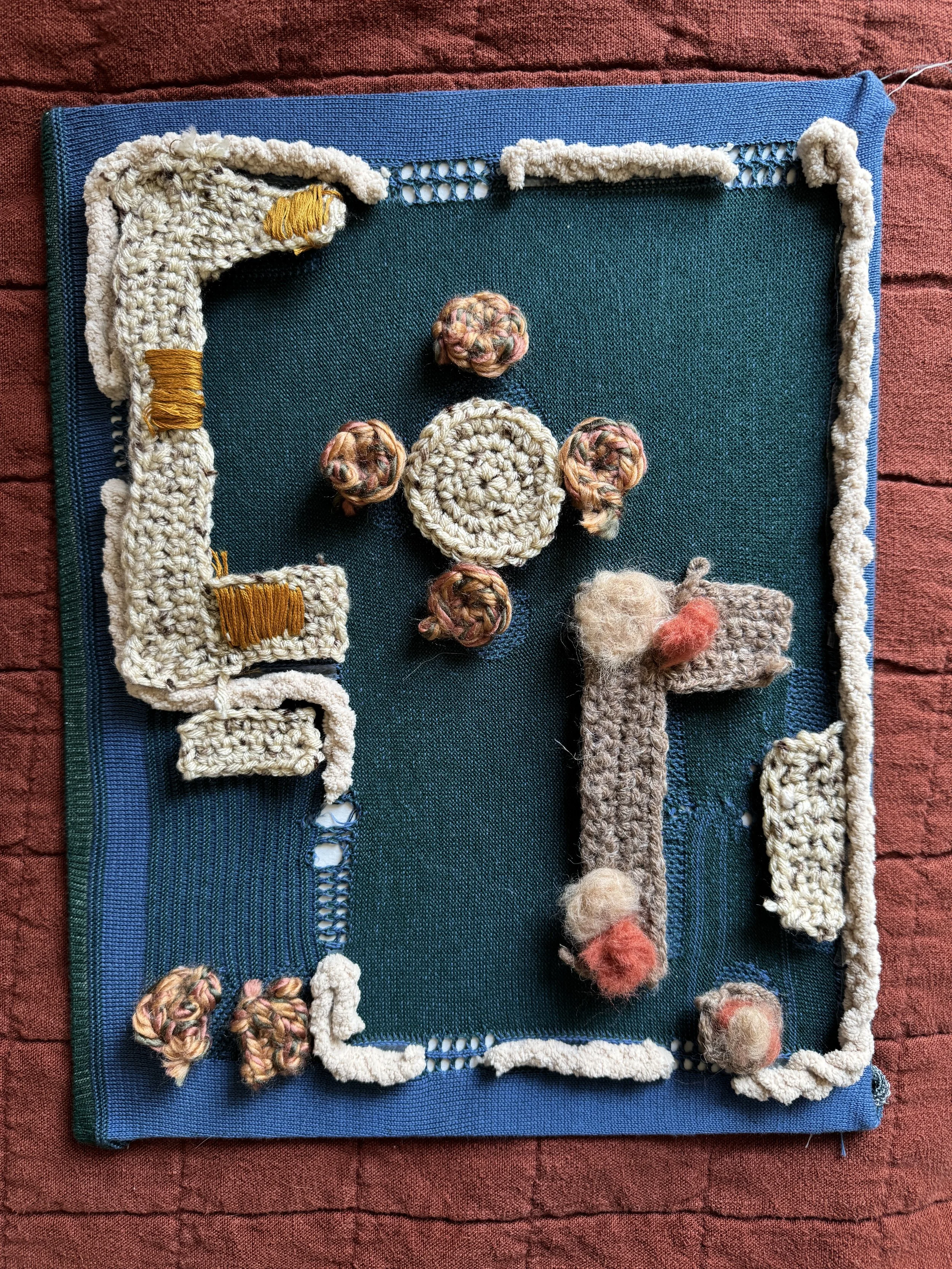
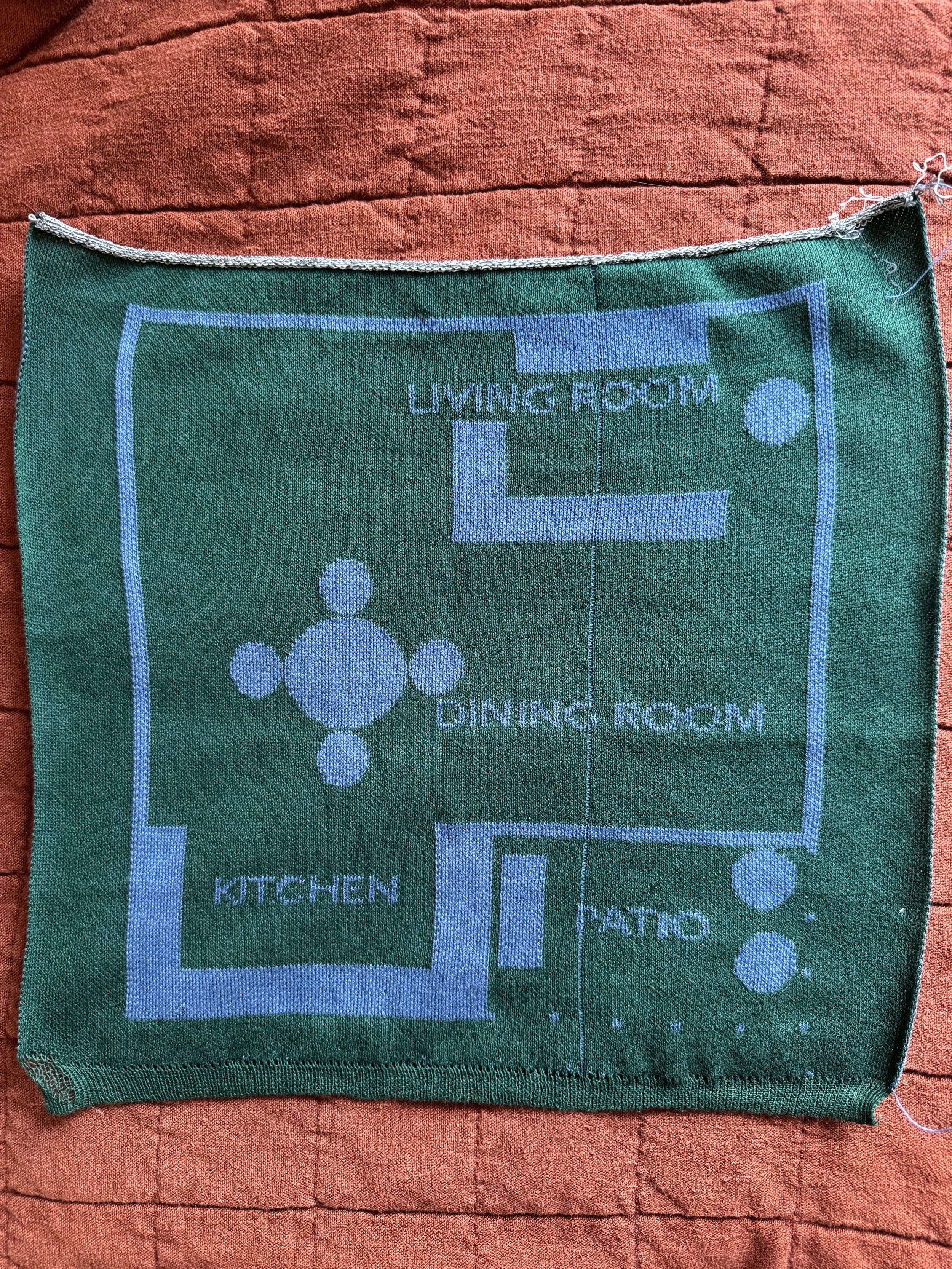
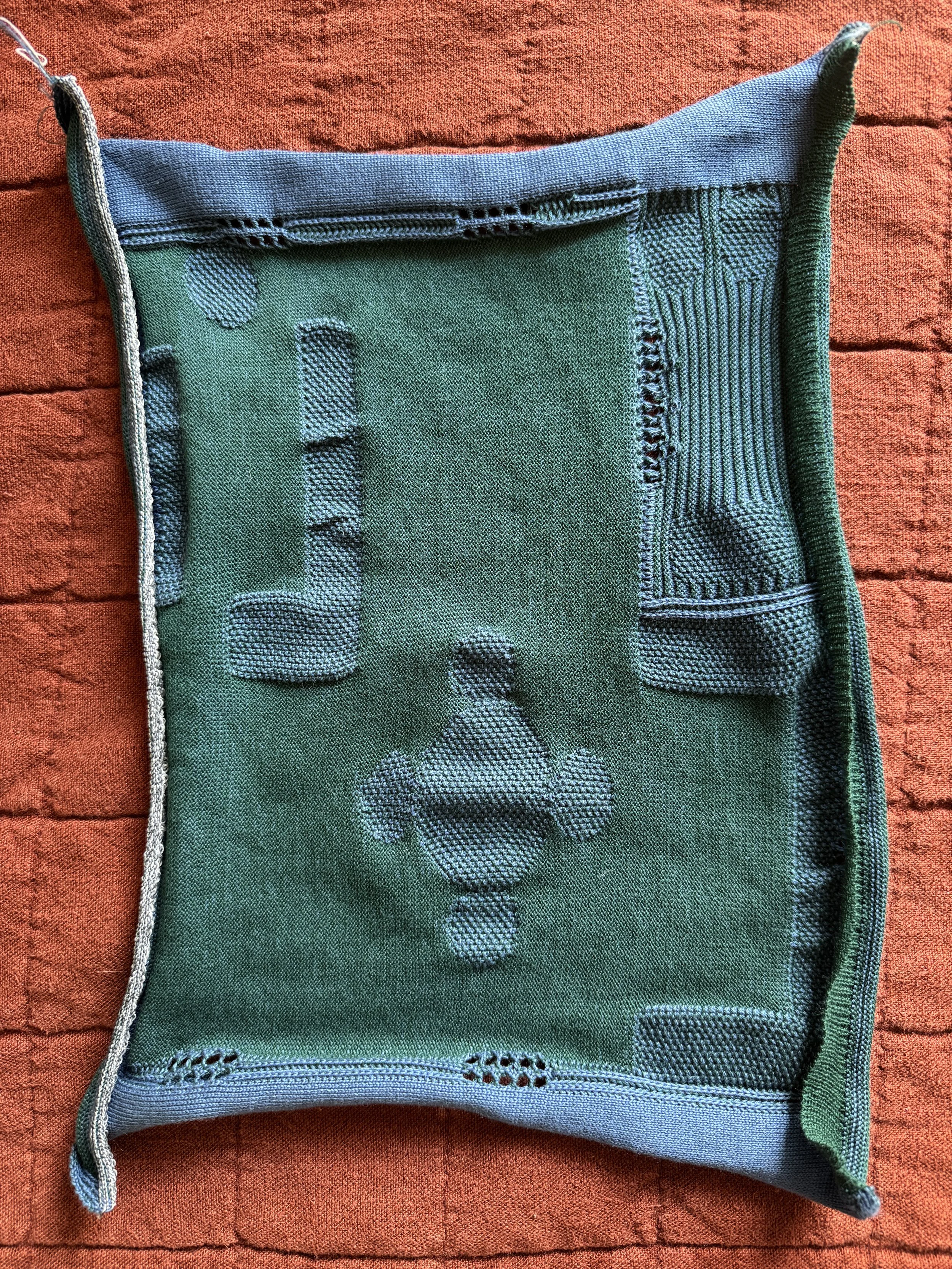
The result was not intended to replace a conventional floor plan. Instead, the experiment helped me think about what an architectural drawing can communicate when it is made through a different medium.
This is one of the reasons I continue to move between digital and physical processes. Each medium offers a different way of understanding an idea. Digital tools allow for quick iteration, precise manipulation, and complex spatial studies. Hand processes encourage a closer attention to material, movement, and the physical act of making.
I am particularly interested in the space between these approaches. A digital pattern can become a physical structure. A drawing can become an object. Fiber can become a way of sketching in three dimensions.
For me, making is not separate from design. It is a way of investigating design. Working with materials can reveal qualities that are difficult to understand through a screen, while digital tools can provide another way to develop and extend those physical experiments.
The goal is not to choose physical making over digital design. It is to recognize that both can be useful ways of thinking, and that moving between them can reveal new possibilities for understanding space.
