The Dining Room
A note on memory, architecture, and the ordinary places that quietly shape our lives.
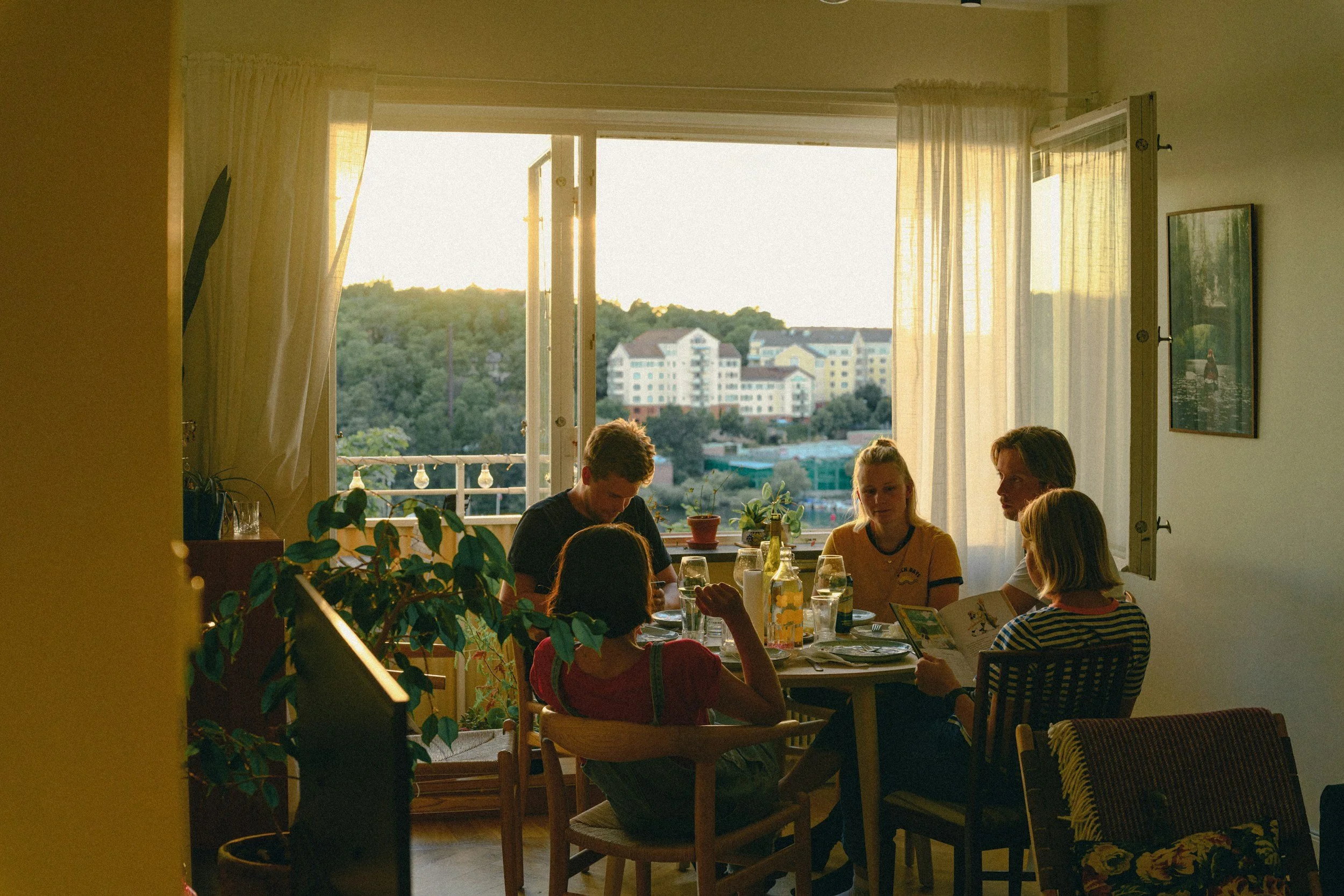
Every Tuesday evening, a family gathers around the same dining table.
The floor plan hasn’t changed in years, but the room is different every week.
The walls remain where they’ve always been, although the paint color changes every few years. There’s a small dent at the bottom of the wall from the time seven years ago when you and your sister got roller skates for Christmas. You didn’t tell your dad about the dent until he discovered it randomly last year.
The dining table itself is ordinary. A familiarity.
A place where you’ve sat every night since 2003, always in the same seat despite never discussing who should sit where. From your seat, you can see the wheat field through the window. Last year it was corn. The windows have always been there, acting as a frame for the seasons changing outside.
Very little has changed about the design of the space, yet each Tuesday night, the room is different. It feels different.
As a kid, you would get home from school, sit down to do homework, and dinner would magically appear on the table at 4:30 p.m. As you got older, you started helping with dinner, yet still sat down at 4:30 when your dad got home from work. When you started playing sports after school, dinner got pushed to 6:30, but your whole family would wait for you to get home before eating. Your sister always complained about being starving.
The kitchen table was a place for conversations about everyone’s day. A place for three-hour Monopoly games on Saturday nights. A place to study for a hard math test, your papers scattered across tiny crumbs left from the cornbread you ate hours ago.
Think about everything the kitchen table has witnessed. It’s seen you in your jorts phase, your matching set phase, your “mysterious library girl” phase. It’s seen you with braces, with the poorly cut bangs, with that friend who you thought you knew but really didn’t. It’s seen horrible fights with your sister that ended with you stomping upstairs to cry in your room. It’s seen the first-time food became something to worry about instead of simply enjoying. The table remembers versions of you that no longer exist.
Some days it feels like the walls have gotten closer. Like the room itself is smothering you. Like the tension is present in the air long before anyone says anything. Other days, it feels as if the walls disappear. A cool September breeze filters through the windows. The French doors behind you are open, allowing the late afternoon sun to warm your back. Your golden retriever sits patiently at your mom's feet, waiting for a piece of her cheeseburger. Everyone helps clean up dinner before sitting back down to play a game of Uno while the smell of your dad's coffee drifts in from the kitchen.
Maybe the dining room was never designed for meals.
Maybe it was designed for everything that happens around them.
For a long time, I thought design was about shaping physical spaces and making them beautiful. Now, I think beauty might be the smallest part of the job. I used to think architecture was the main character, but now I think it's the setting. The supporting character that's rarely mentioned, yet quietly carries the entire story.
We often talk about buildings as if they're complete the day construction ends. We photograph them before anyone moves in. We publish pristine renderings without fingerprints on the countertops or jackets hanging over the backs of chairs. But the most important part of architecture begins after the ribbon cutting.
A room only becomes a place once people begin leaving pieces of themselves there.
When little kids make dents in the walls from roller skating. When a pan of chicken leaves a burn mark because the potholder didn't quite work. When there are scratches under the chairs because the dog chewed off all the furniture pads.
Perhaps that's why some buildings feel immediately alive while others never quite do.
Not because of better design, though design certainly matters. Because one has accumulated stories.
Maybe that's why I keep coming back to Tuesday night dinner.
The room hasn't changed much in twenty years. The dent is still there. The windows still frame the fields as they move from wheat to corn and back again. Everyone still sits in the same seats.
And yet, every Tuesday evening, it becomes an entirely different place.
