Spatial Melodies
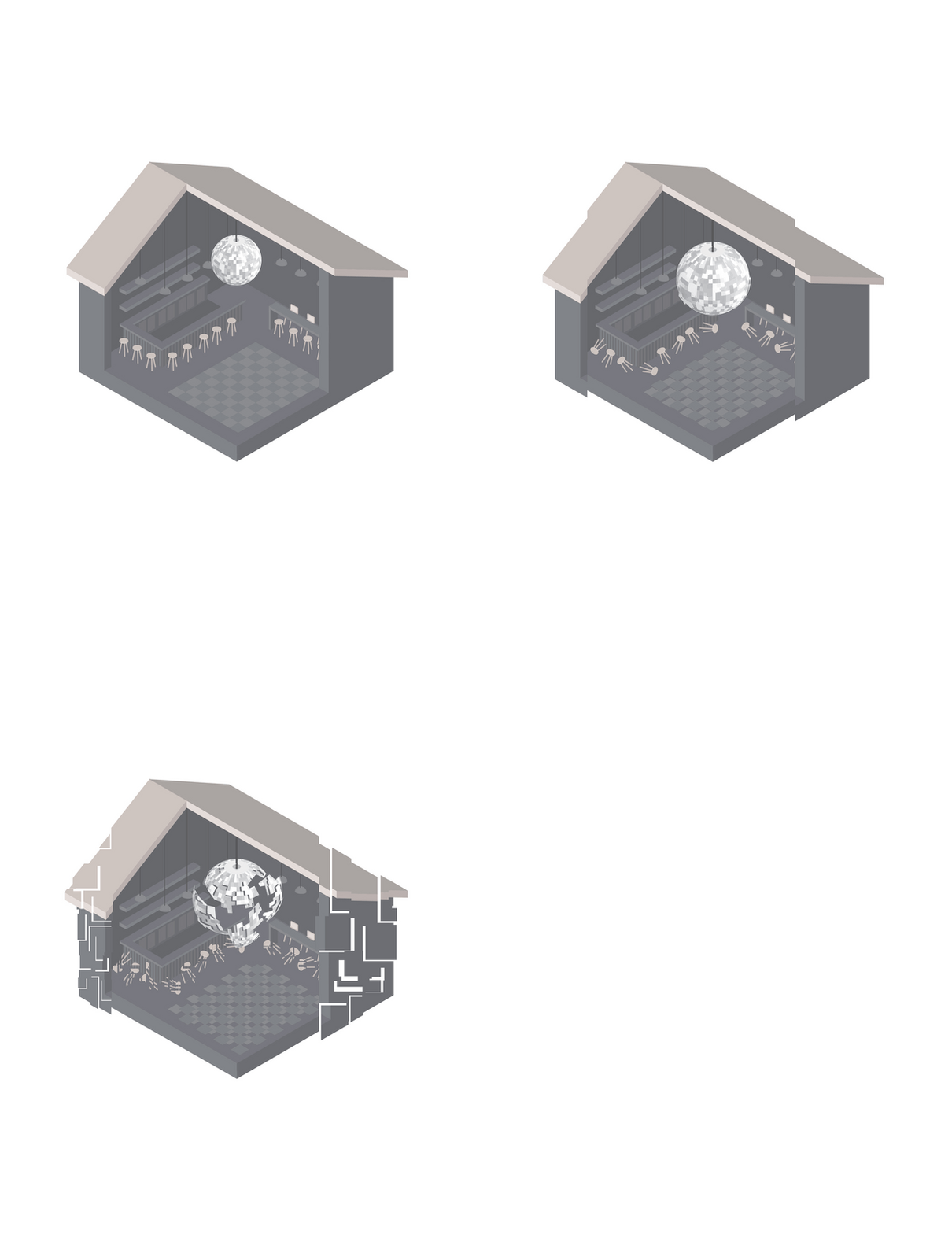
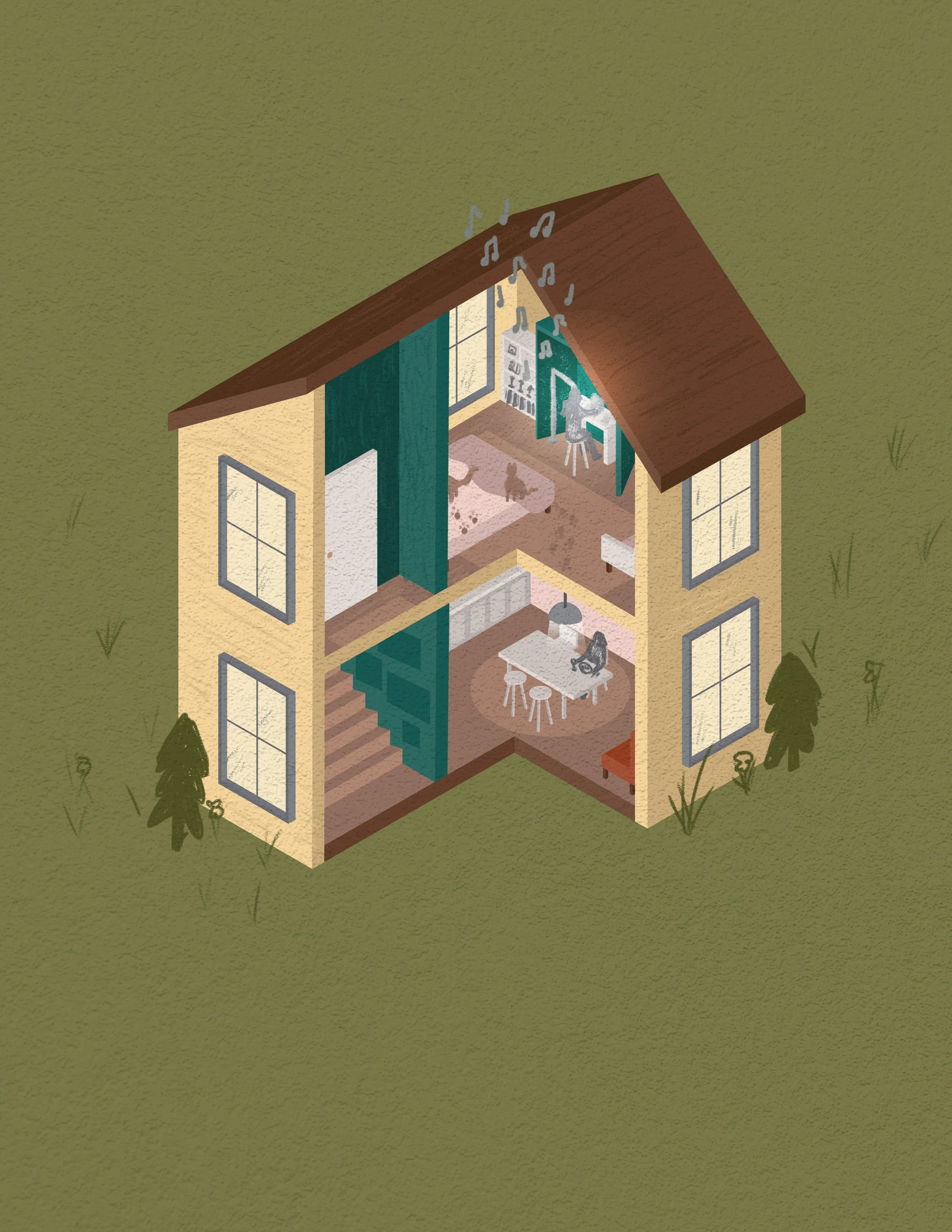
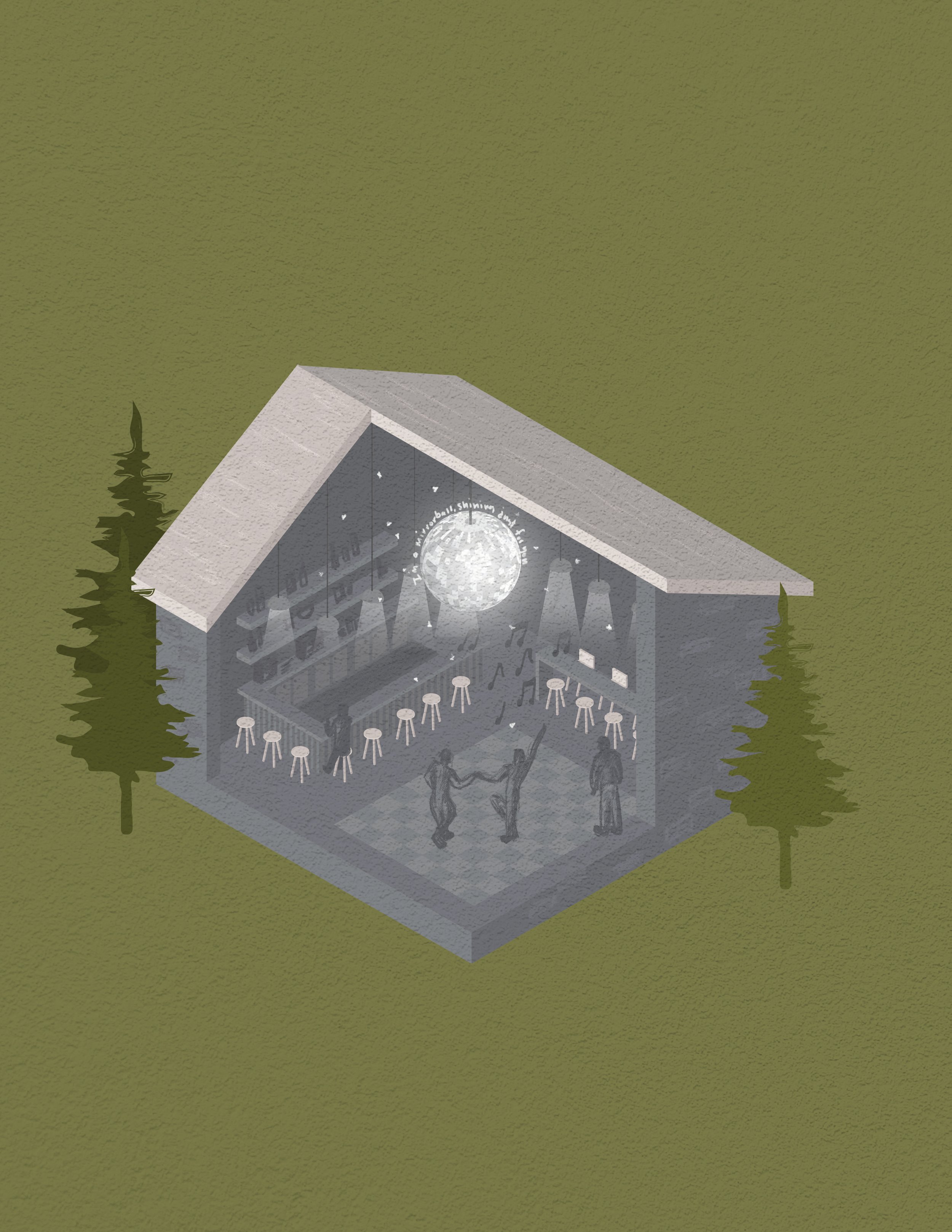
This project translates music into architecture by transforming Taylor Swift's folklore into a fictional landscape. Using principles of worldbuilding, urban planning, and narrative illustration, the project explores how sound, memory, and emotion can generate spatial experiences rather than simply inspire them.
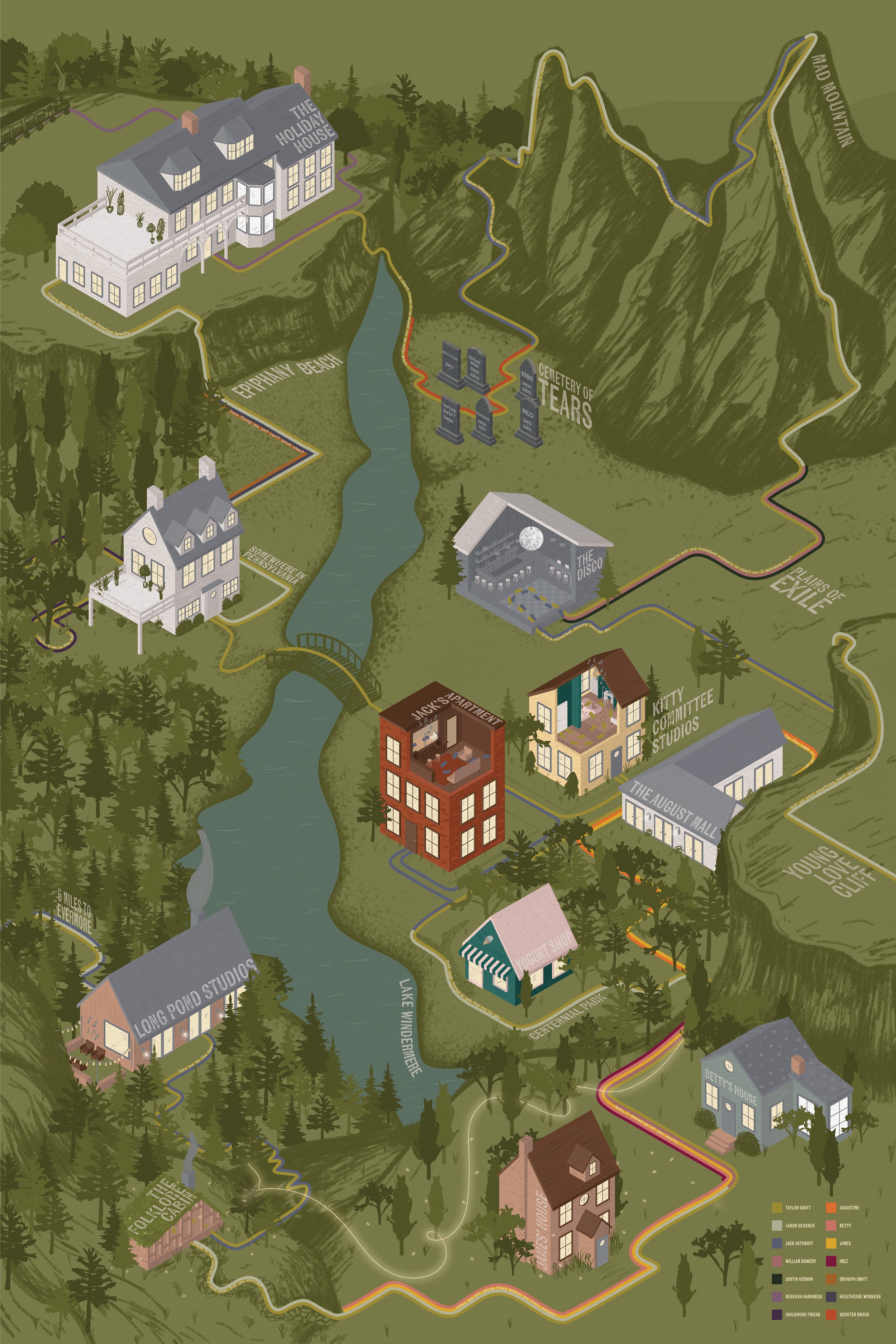
Spatial Melodies explores how music can be translated into architecture through storytelling, worldbuilding, and speculative mapping. Inspired by Andrew DeGraff's illustrated Cinemaps, this project reimagines Taylor Swift's folklore as an inhabitable landscape, asking how rhythm, atmosphere, memory, and emotion might shape space instead of traditional architectural constraints.
I began by closely analyzing the album's lyrics, musical production, recurring characters, and visual themes. Songs were organized into five thematic districts—nostalgia, escapism, young love, darkness, and karma—creating the narrative framework for the world. Drawing from Kevin Lynch's theory of urban legibility, these themes became districts connected by paths, landmarks, edges, and nodes that guided movement through the landscape.
Musical characteristics were then translated into spatial qualities. Tempo determined the topography, with faster songs becoming mountainous terrain and slower songs settling into lower valleys. Musical key informed vegetation and ecology, while landmarks emerged from both the album's fictional imagery and moments from Taylor Swift's own life, intentionally blurring the boundary between autobiography and myth. Woven pathways connected these places, tracing the journeys of recurring characters across the landscape and allowing viewers to experience the album as a navigable world rather than a linear collection of songs.
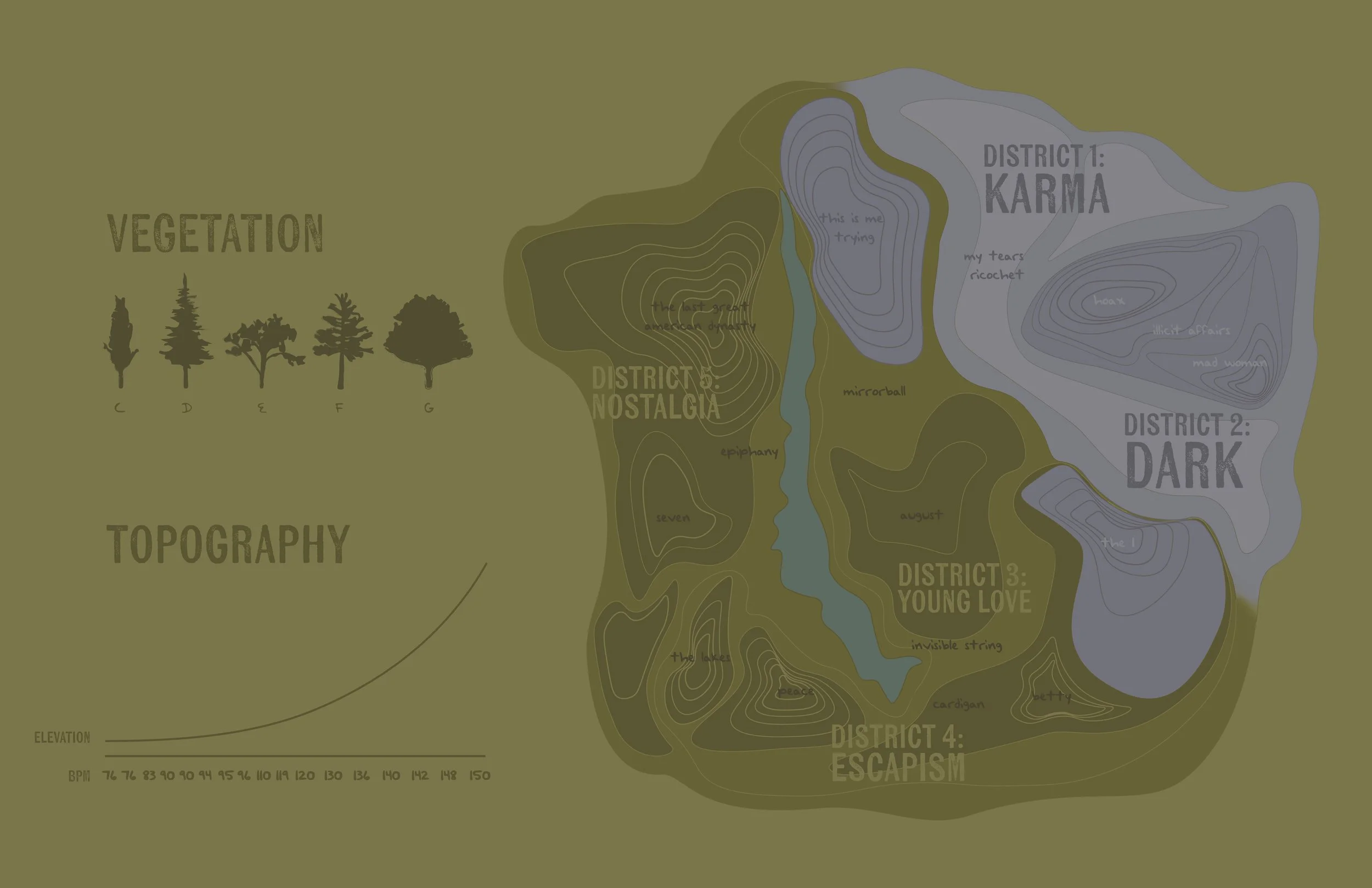
Instead of designing a place and then imagining its story, I allowed the story to design the place.
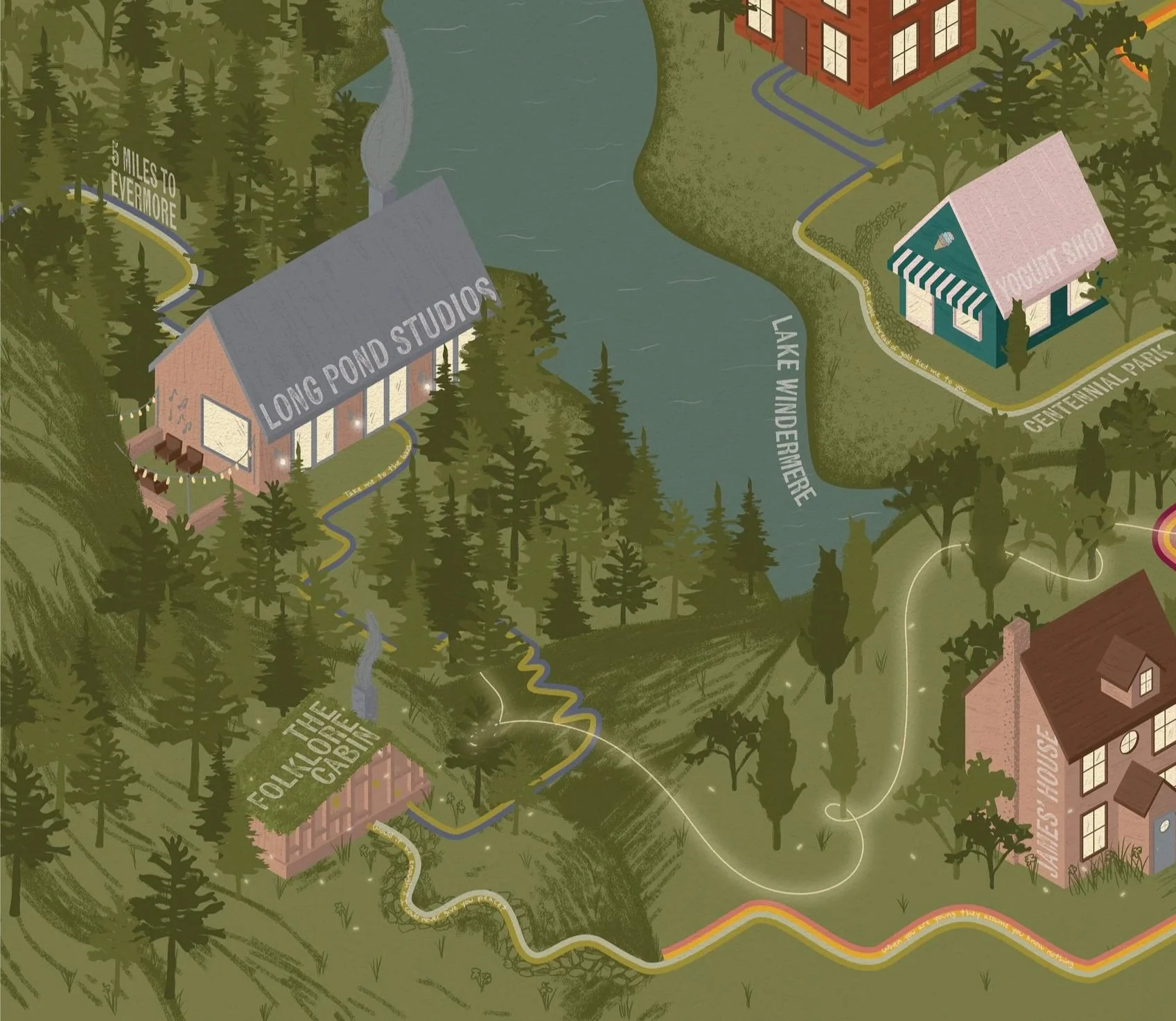
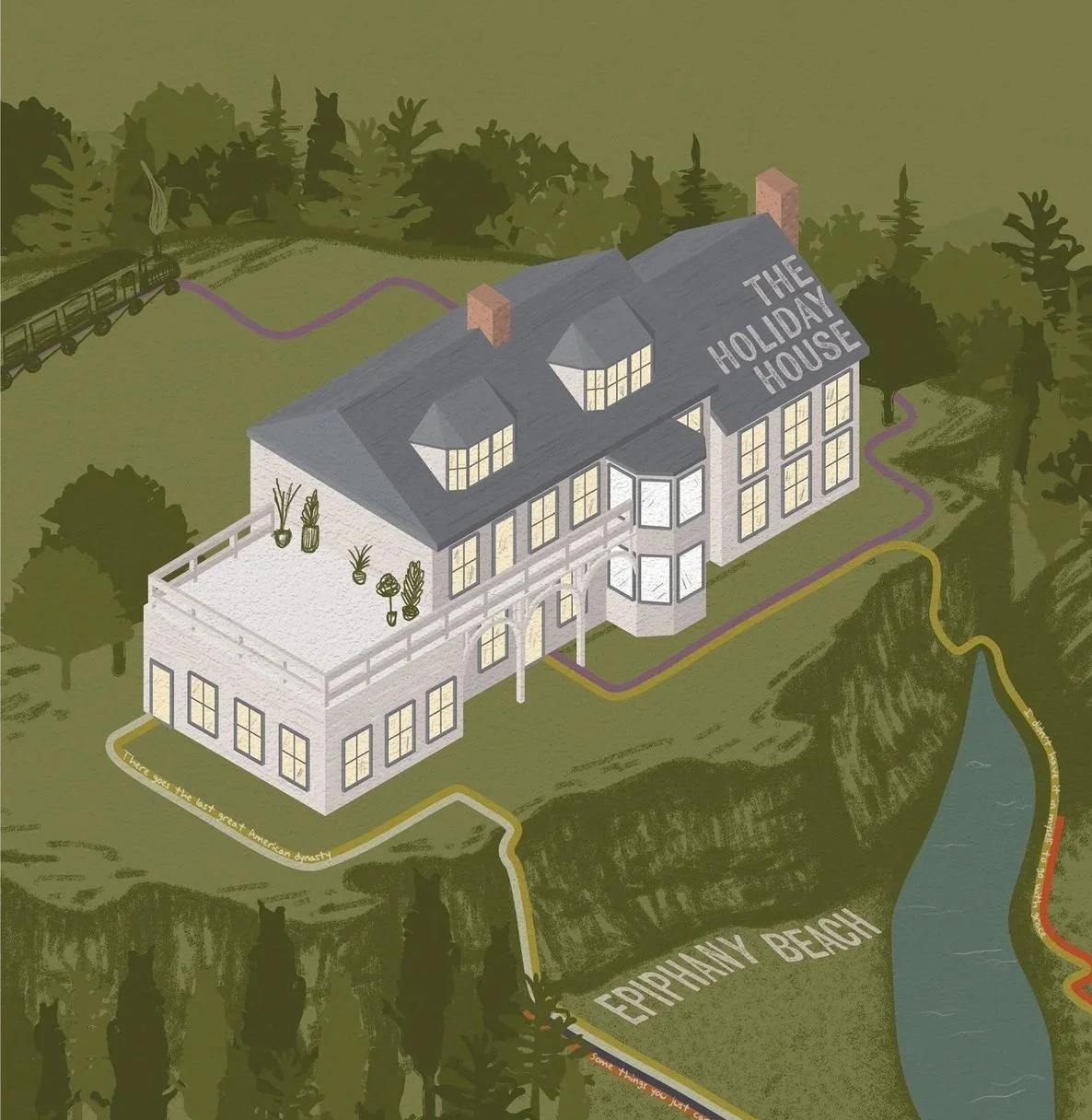
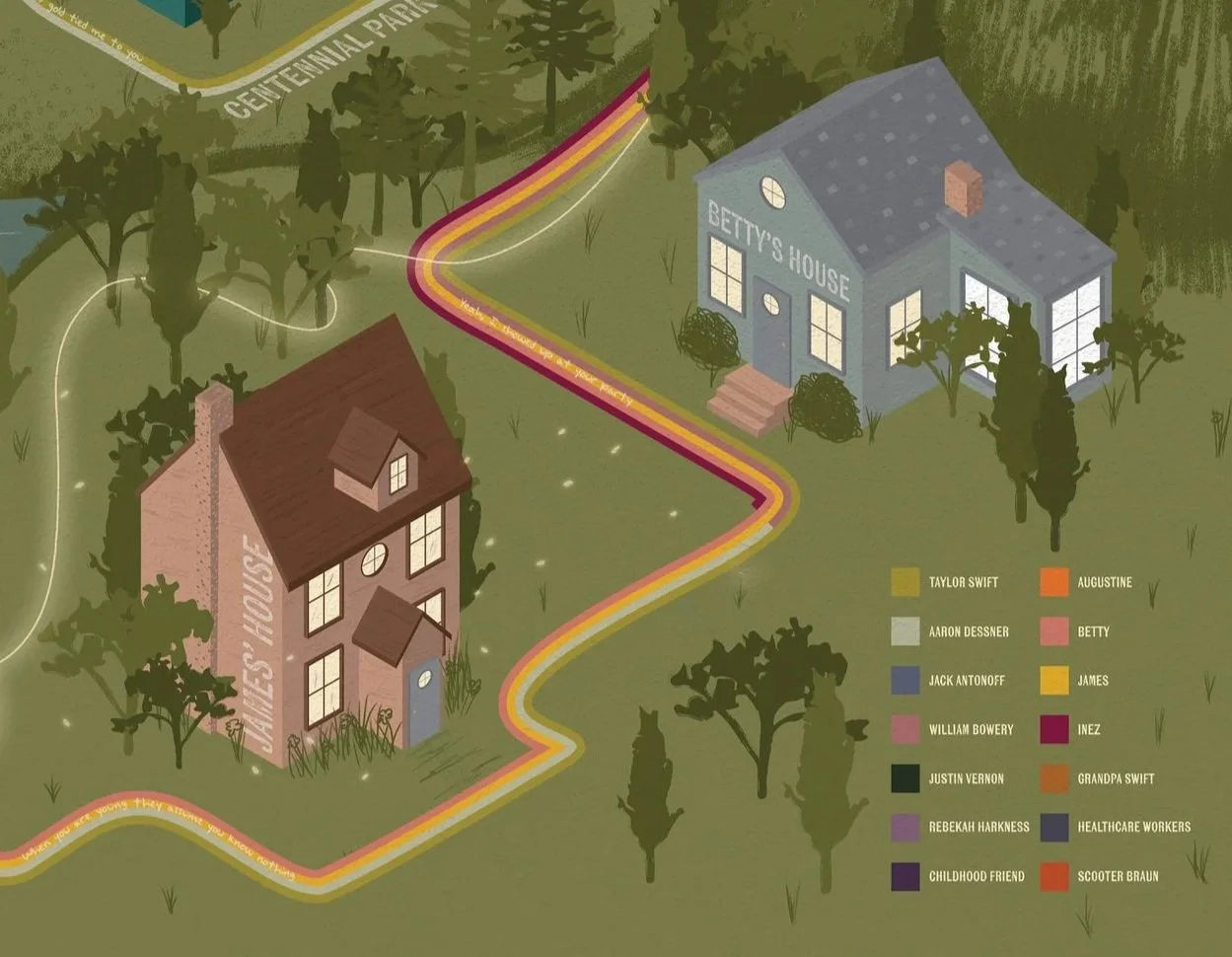
More than a tribute to a favorite album, Spatial Melodies became a turning point in my research. It demonstrated that architecture can be informed by sensory experiences beyond the visual, and that narrative, music, and emotion can serve as legitimate design generators. The project reinforced my belief that visualization is not simply about representing architecture, it can also be a way of discovering it.
Creating the map required thinking about architecture in reverse. Instead of designing a place and then imagining who might inhabit it, I allowed narrative to generate the landscape itself. This process revealed how stories can shape spatial organization, atmosphere, and identity long before walls or buildings are designed.