Tuesday Night Dinner
This project explores the idea that architectural drawings can be read like stories rather than technical documents. Through a narrative floor plan and layered risograph print, this project reveals how everyday routines, emotions, and relationships leave traces on the spaces we inhabit.
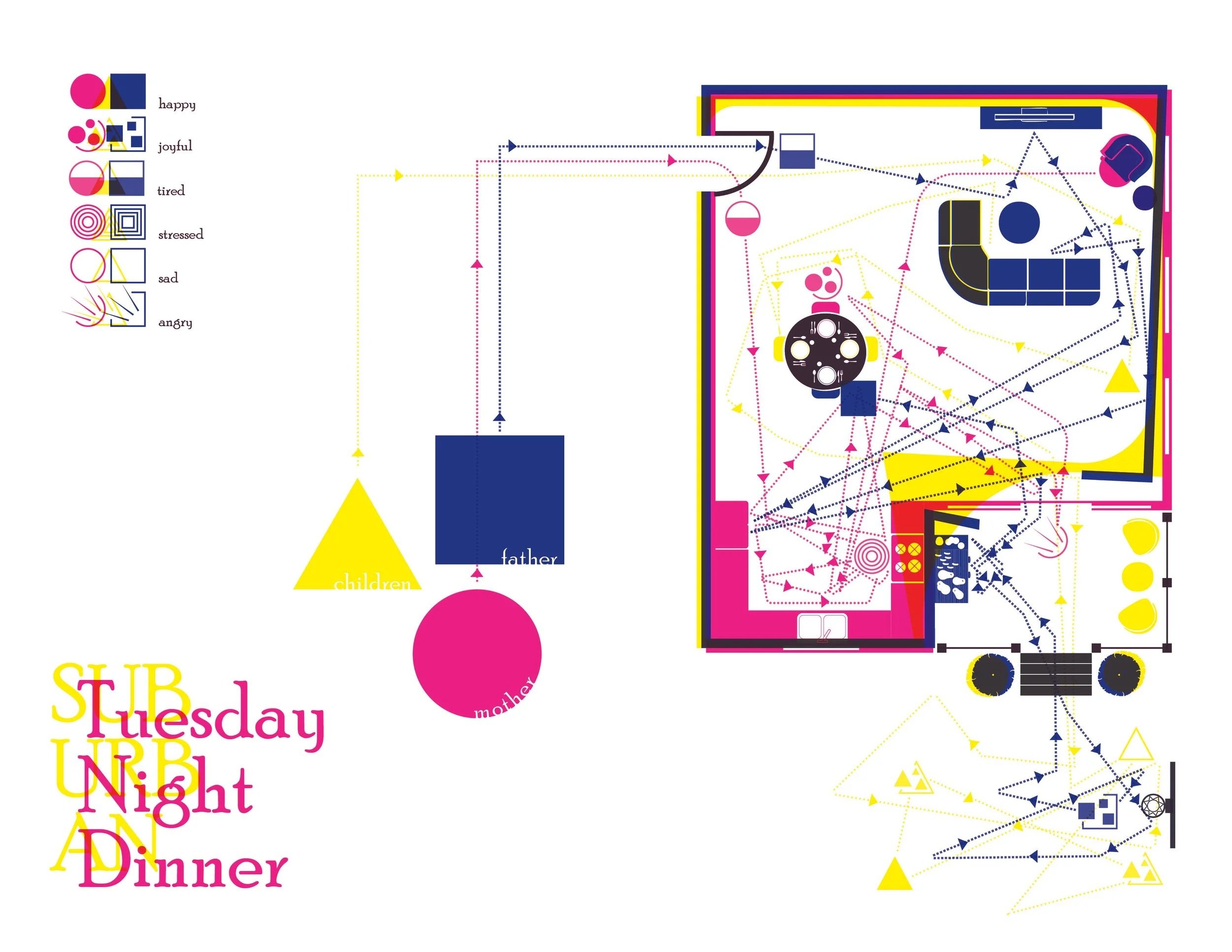
This project investigates how architectural drawings can communicate narrative rather than simply document space. Inspired by the speculative drawings of Archigram and ethnographic mapping techniques, I explored the floor plan as a form of visual storytelling, one capable of revealing relationships, routines, and emotions that are often invisible in traditional architectural representation.
I began by designing a simple suburban home centered around the kitchen, living room, and backyard. Rather than drawing the architecture alone, I developed four fictional family members and mapped their movements through the house during a single evening: arriving home from work and school, preparing dinner, playing outside, gathering around the table, and cleaning up afterward. Each character was assigned a unique graphic language and color, allowing their paths to overlap and accumulate as the evening unfolded. Instead of illustrating walls and furniture as static objects, the drawing records how each space is experienced through everyday life.
As the narrative developed, I allowed the architecture itself to respond to the characters' emotions and behaviors. Rounded corners reflected the children's constant movement, comfortable spaces softened around the parents' favorite places to sit, and moments of conflict shifted portions of the drawing to visualize emotional tension within the home. The floor plan became less of a measured document and more of a living record of human experience.
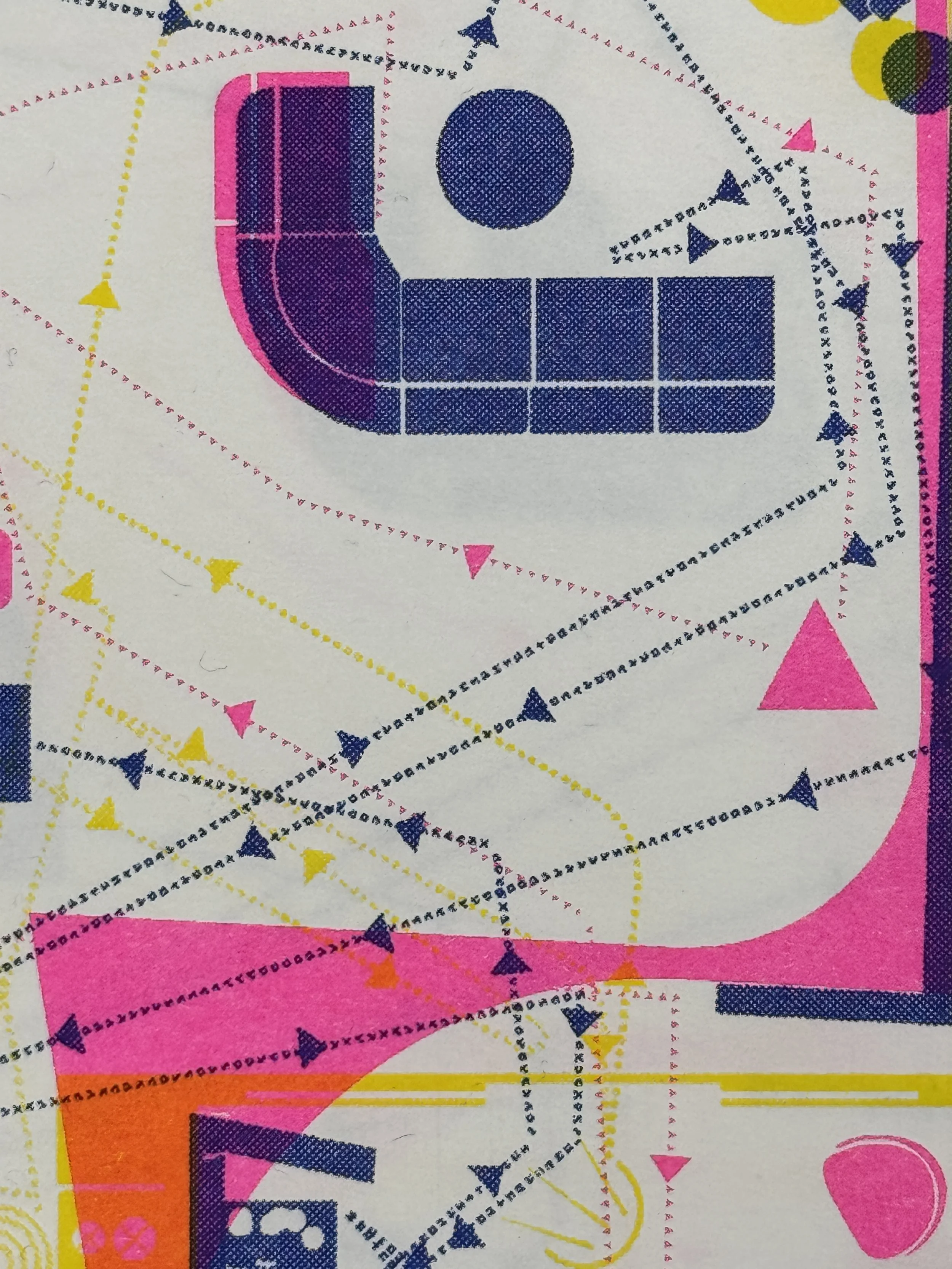
To reinforce the idea of layering memories and interactions, the final drawing was printed using a three-color risograph process. Each color was printed separately, allowing slight registration shifts and overlapping inks to become part of the final composition. Rather than treating these imperfections as flaws, they became visual evidence of multiple stories occupying the same space.
This project challenged the assumption that architectural drawings must be objective or purely technical. Instead, it proposes that plans can function like narratives, capturing not only where people move, but how they live, relate, and create meaning within the spaces they call home.