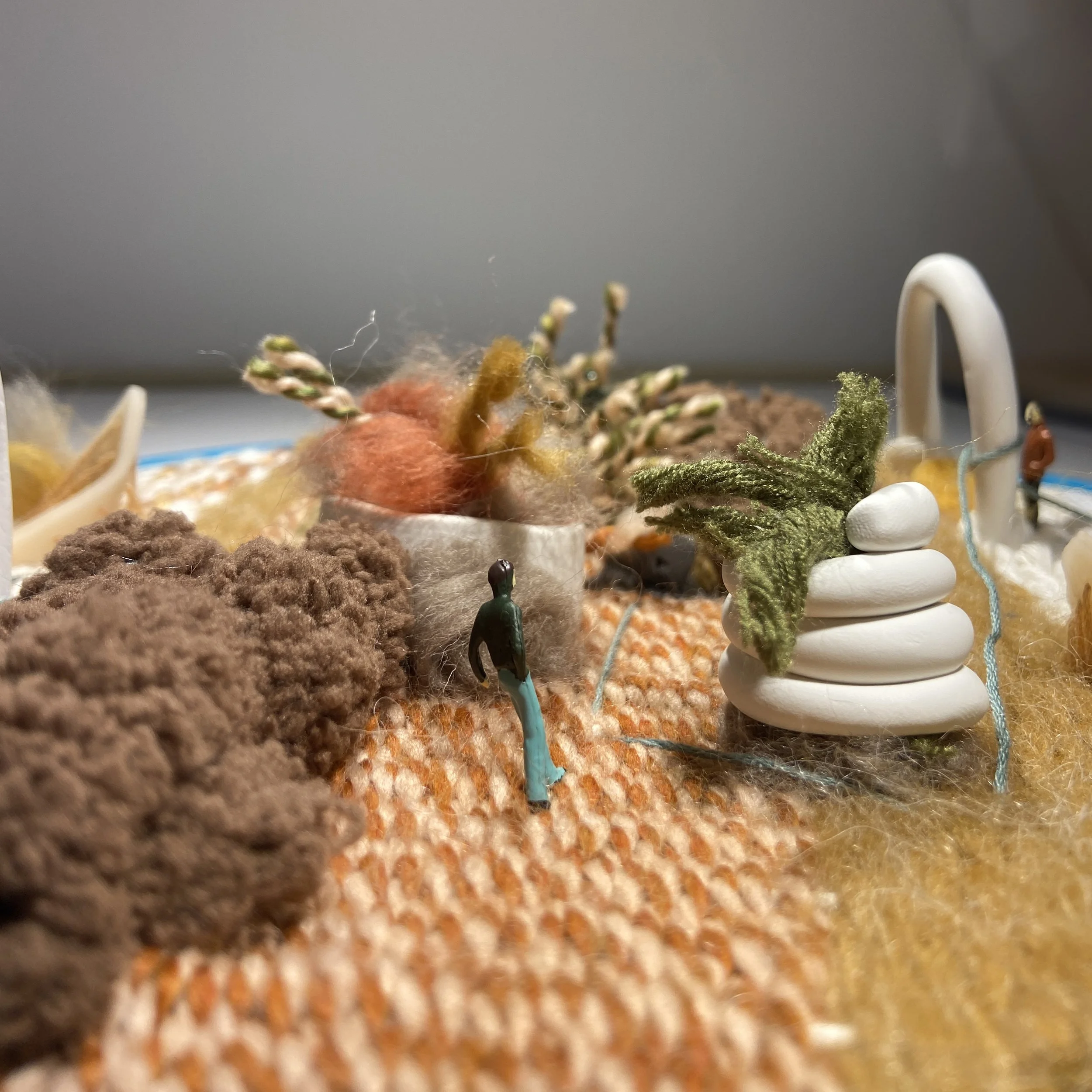
Tactile Hero’s Journey
This project explores how storytelling can become a method for understanding and communicating architecture. By translating the hero's journey into a tactile embroidered landscape, I investigated how narrative, materiality, and craft can reveal the emotional experience of moving through space.
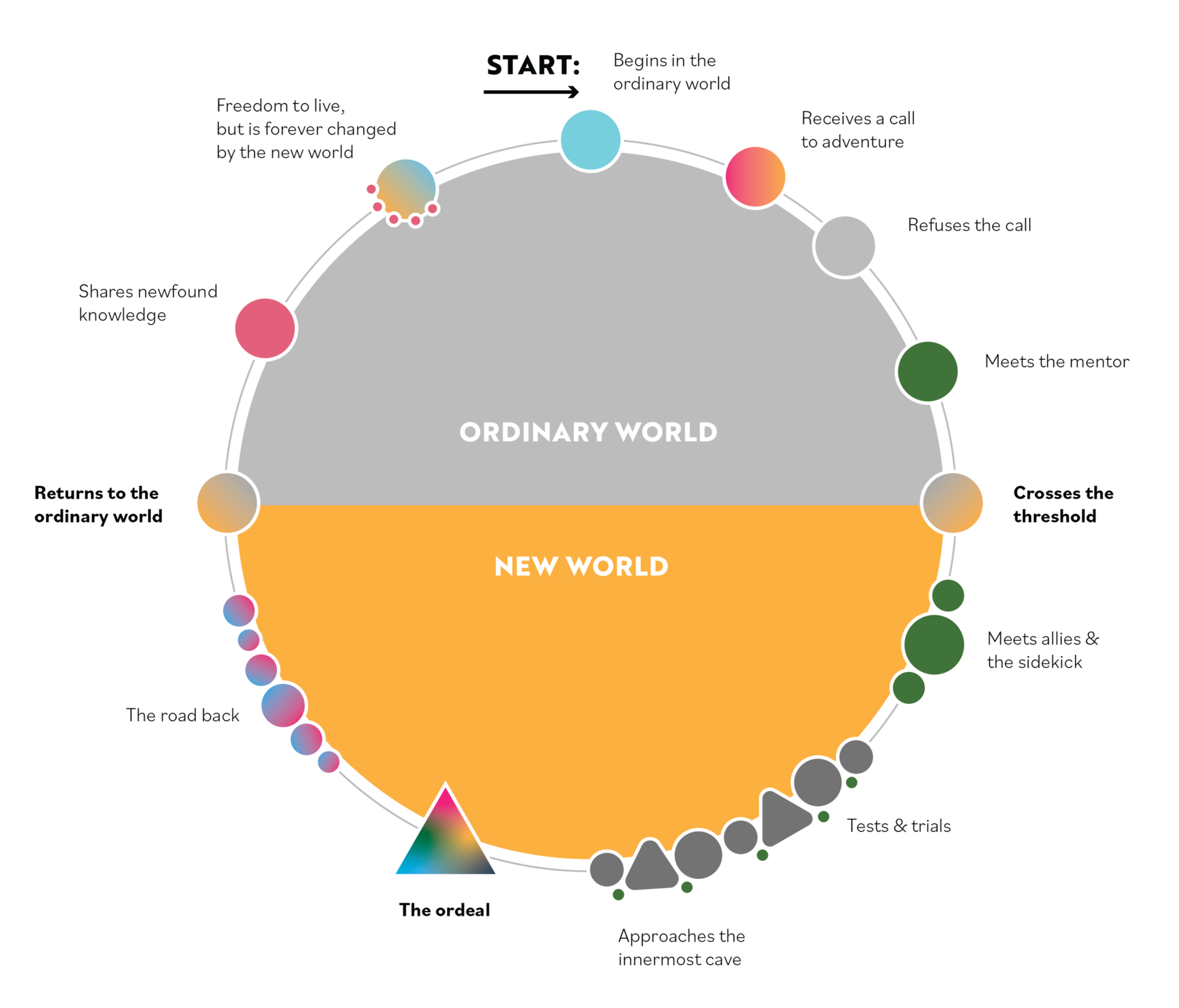

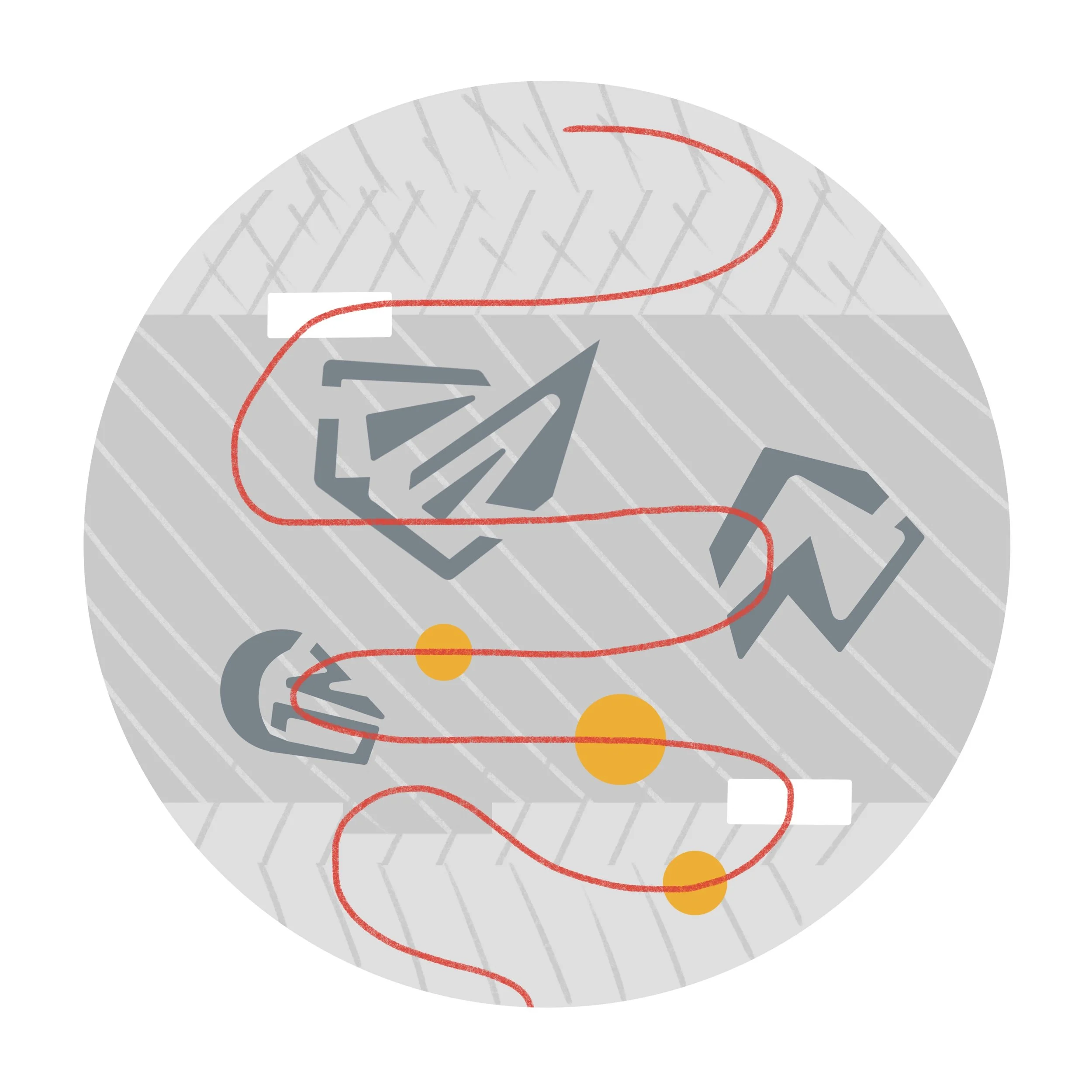
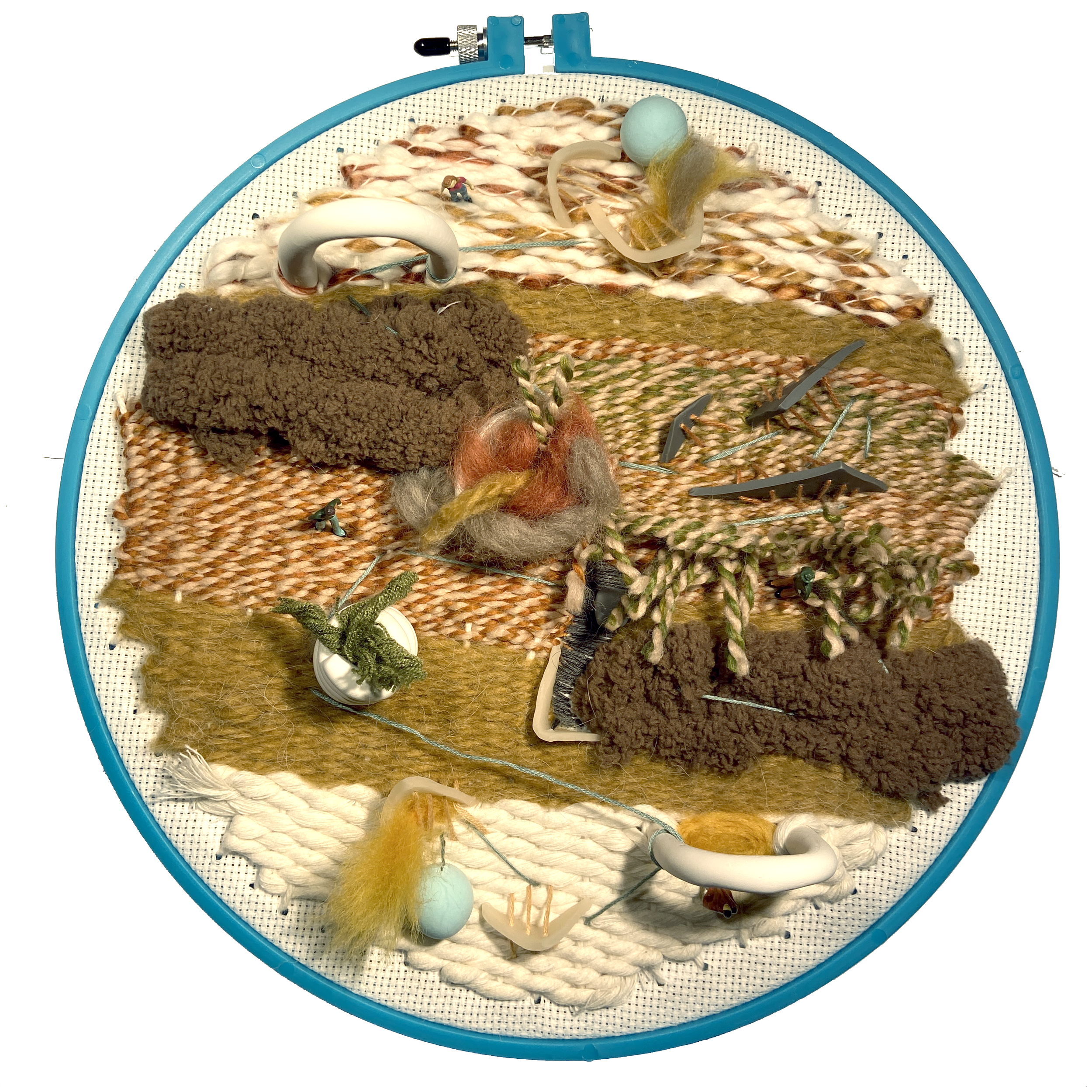
This project was the first conceptual prototype of my master's thesis, exploring how narrative can help designers understand and communicate spatial experience. Rather than beginning with plans or renderings, I started with one of the oldest storytelling frameworks: the hero's journey.
I reimagined the hero's journey as a user's experience of architecture, treating the visitor as the protagonist. Every stage of the journey, from crossing a threshold to encountering moments of uncertainty, discovery, connection, and return, became an opportunity to map how a person emotionally experiences a place. This shifted the focus away from the building itself and toward the lived experience of moving through it.
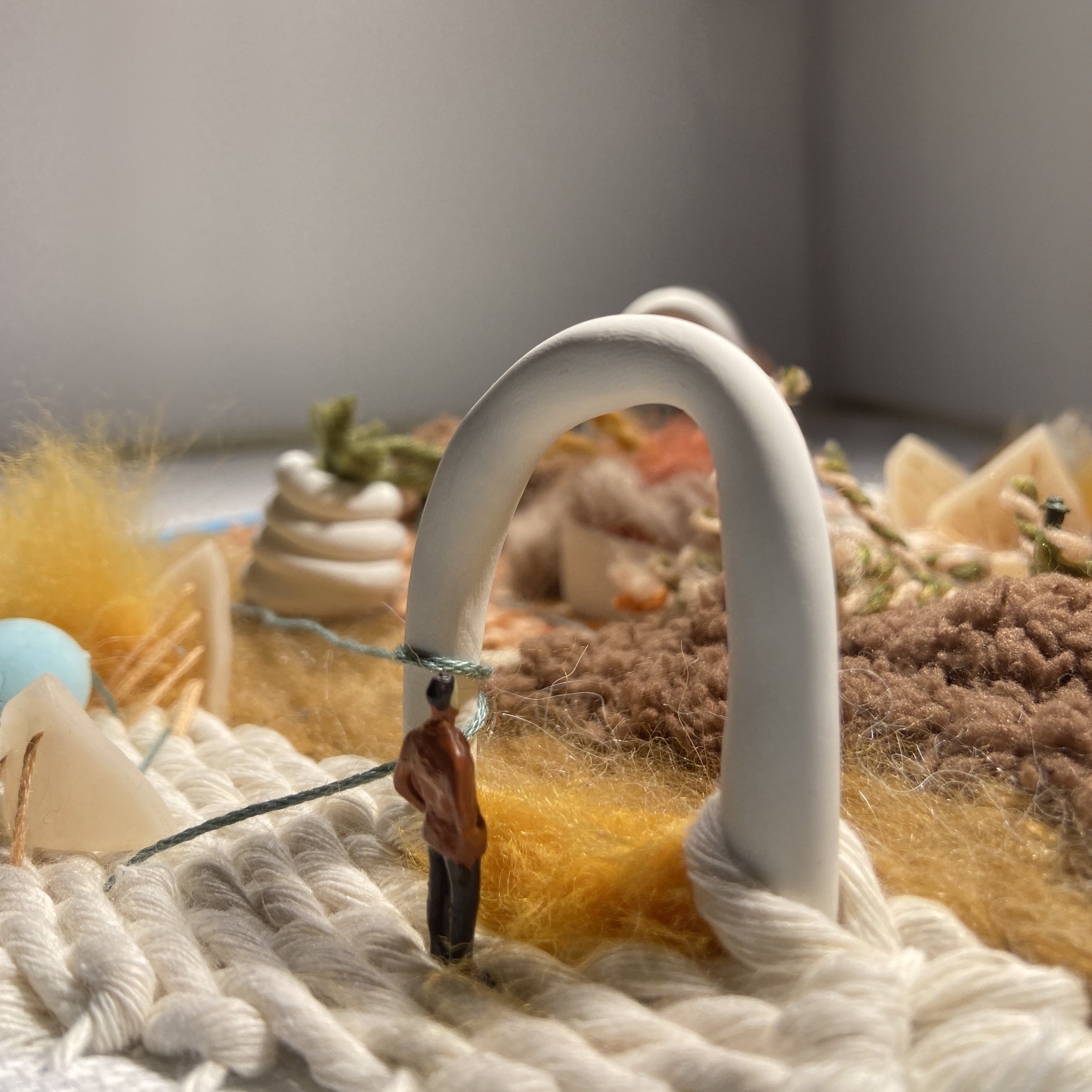
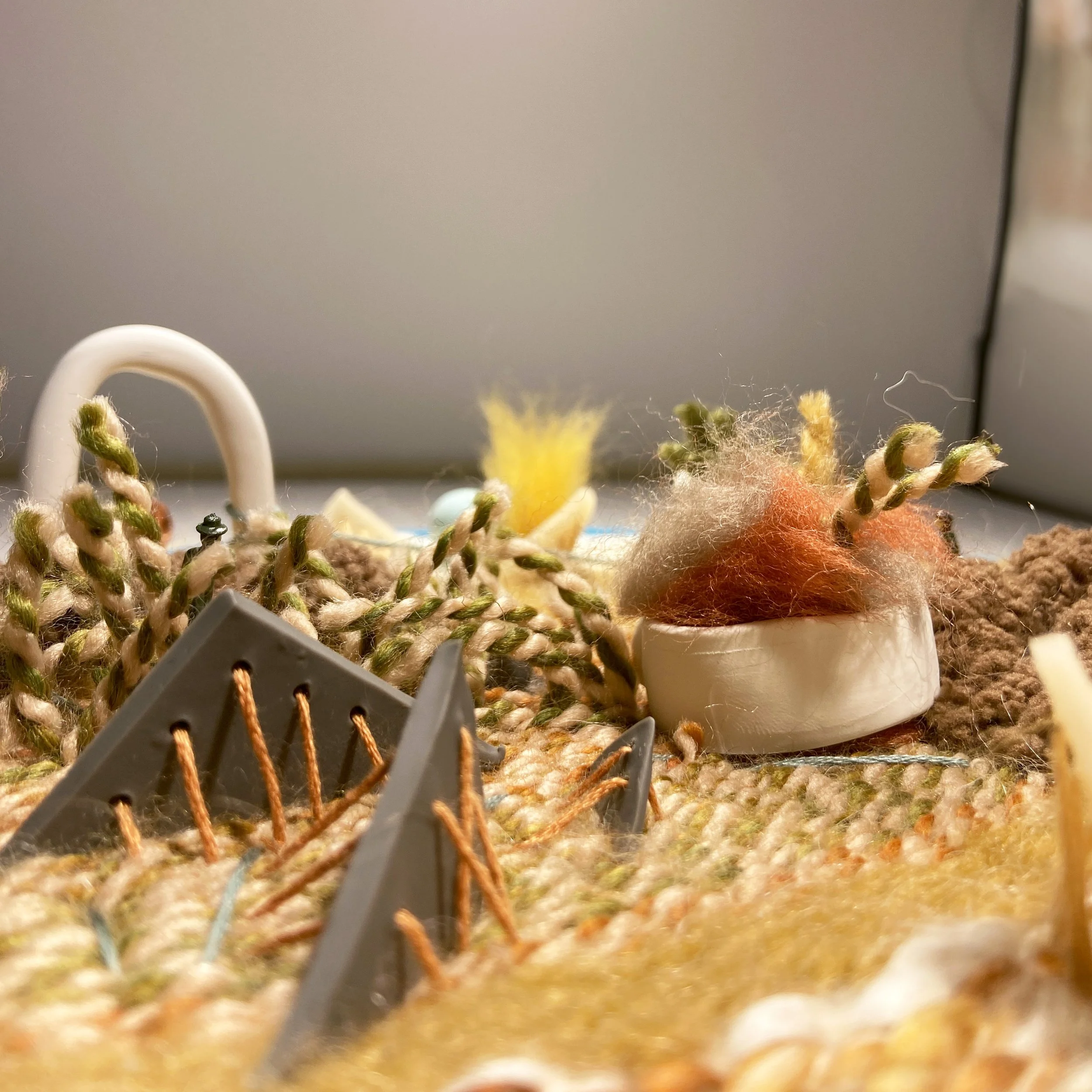
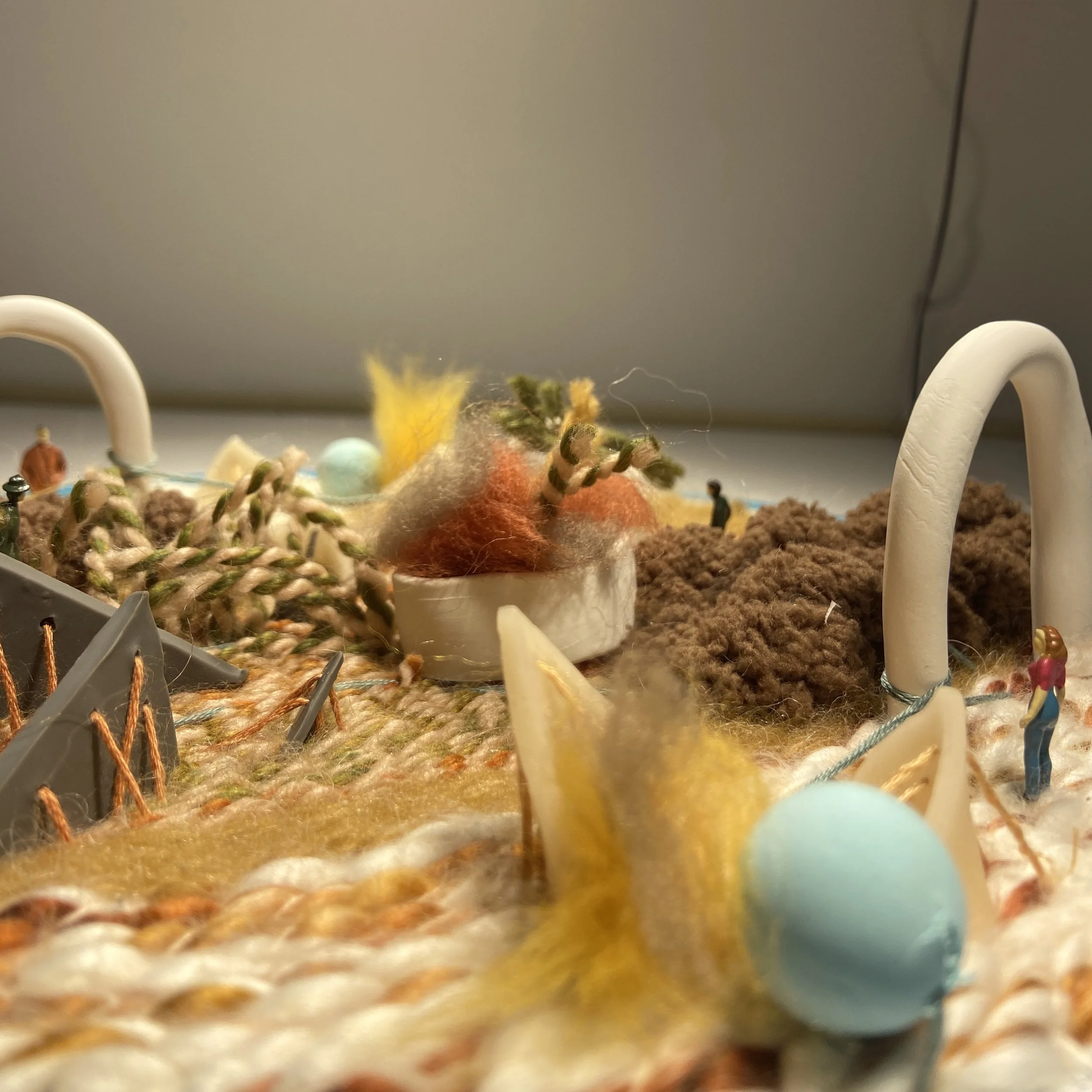
To explore these ideas, I translated the narrative into a three-dimensional embroidered landscape. Beginning with sketches and diagrams, I identified the spatial qualities associated with each stage of the story before weaving and stitching them into a tactile topography. Fiber arts became a form of spatial drawing, allowing material, texture, depth, and craft to communicate ideas that felt difficult to express through digital modeling alone. Rather than forcing embroidery to imitate architectural drawings, I allowed the medium itself to determine what kinds of spatial information it could communicate.
Through this process, I discovered that narrative can function as both a design tool and a visualization strategy. Thinking through the user's story revealed relationships between atmosphere, materiality, movement, and emotion that traditional drawings often overlook. Rather than simply explaining where walls and rooms exist, the project demonstrated how designers can communicate what it feels like to inhabit a space, inviting audiences to experience architecture through empathy instead of observation.
This exploration laid the foundation for my broader research into humanistic architectural visualization, establishing storytelling as a framework for designing and communicating spaces that are understood not only visually, but experientially.